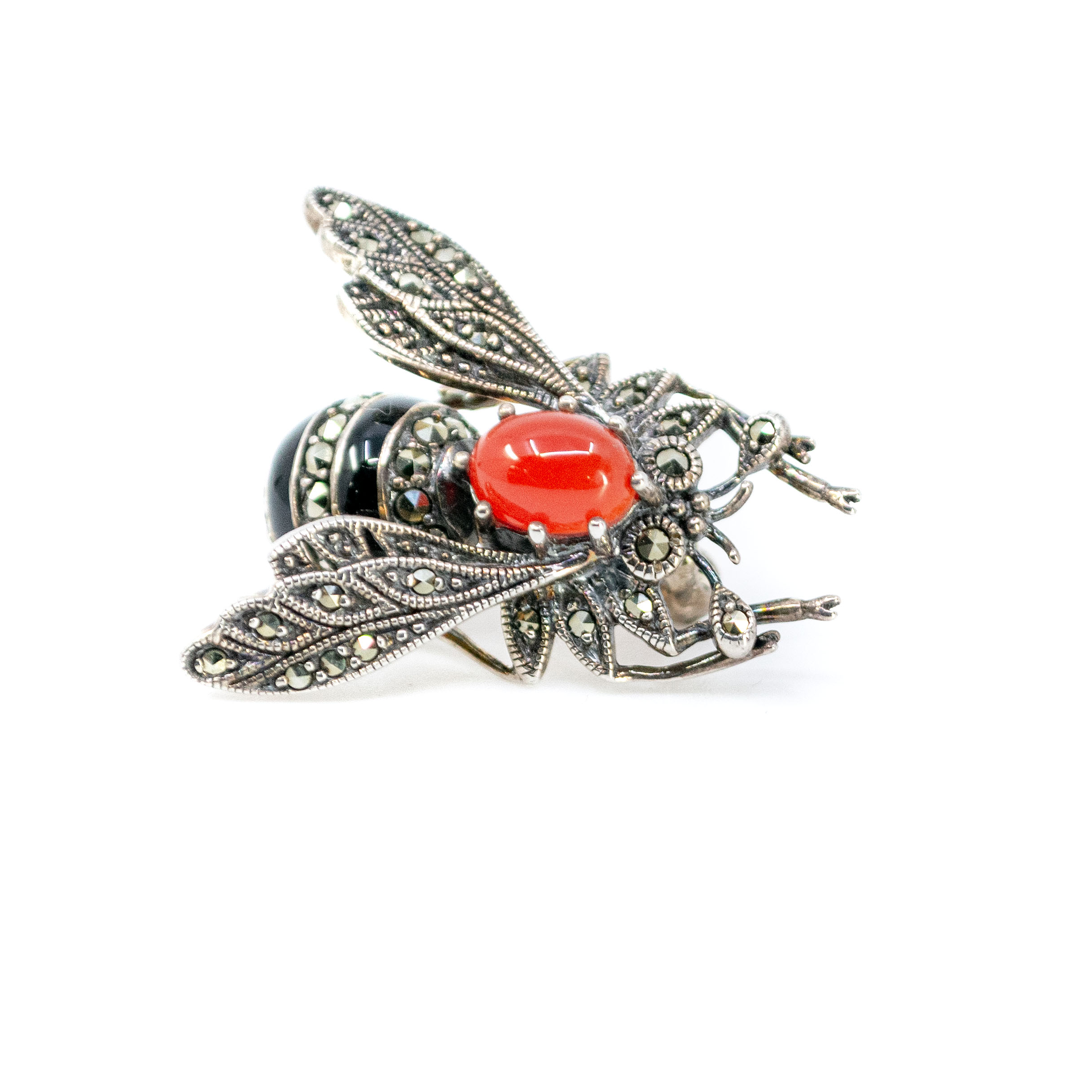
Carnelian Enamel Marcasite (Pyrite) 925′ Silver Insect Brooch 19046-3743
A striking blend of whimsy and vintage craftsmanship ✨ This sterling silver insect ring features glowing orange-red carnelian, rich black enamel, and sparkling marcasites arranged in beautifully textured wings. The lifelike detailing and sculptural form make it a captivating statement piece for collectors of unusual jewelry.
Specifications
- Design Era
- Victorian
- Design & Historical Context
- The Victorian Era spanned Queen Victoria's rule of England from 1837 until 1901. During this time, a middle class began to emerge, sparking a demand for jewelry in the mass market, jewelry trends often reflected the tone of current events. The era is usually divided into several subsections: the Romantic Period from 1837 to 1861, the Grand Period from 1861 to 1880, and the Aesthetic Period from 1880 to 1901. During the Romantic Period jewelry also featured nature-inspired designs, similar to jewelry of the Georgian era. Frequently, these designs were delicately and intricately etched into gold. Lockets and brooches were popular in daytime jewelry during the early Victorian era, whereas colored gemstones and diamonds were worn during the evening. During the Grand Period jewelry , because the Grand or Mid-Victorian era corresponded with the death of Queen Victoria's husband, many jewelry pieces have solemn, somber designs. Known as mourning jewelry, the pieces feature heavy, dark stones. Jet, onyx, amethyst, and garnet are frequently found in jewelry from this period. Compared to previous periods, Mid-Victorian-era jewelry features highly creative, colorful designs using shells, mosaics and gemstones. During the Aesthetic period, jewelers used diamonds and feminine, bright gemstones such as sapphire, peridot, and spinel. Star and crescent designs as well as elaborate hat pins were also popular. Some scholars believe the aesthetic era began sooner, in 1875, and ended as early as 1890.
- Key Materials
- Carnelian, Enamel, Marcasite (pyrite)
AI Readiness
Good foundation, but some important product data is still missing.
78%