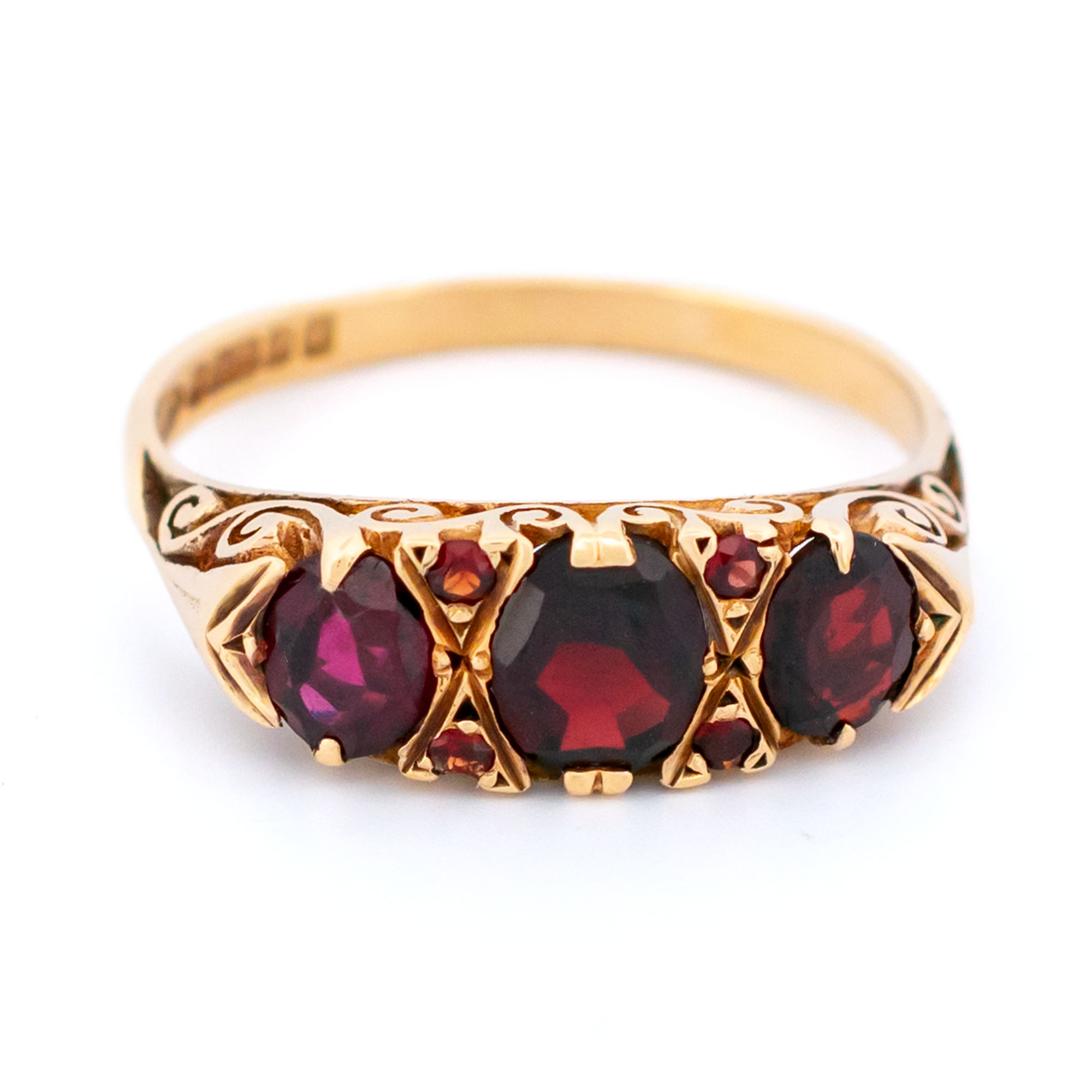
Garnet 9k Trilogy Ring 19126-9715
Rich in Victorian-inspired charm, this vintage trilogy ring showcases approximately 2.50ct of deep wine-red garnets set in warm 9k yellow gold. Delicate scrollwork and ornate detailing frame the three-stone design, creating a beautifully balanced silhouette. Crafted by C.P.S. Jewellery Co. Ltd., Birmingham, in 1971, this elegant piece captures the romance of antique jewelry with timeless appeal.
Specifications
- Design Era
- Victorian
- Design & Historical Context
- The Victorian Era was a time of great cultural and artistic flourishing in England, and this was reflected in the jewelry of the time. During the Victorian Era, a middle class began to emerge, which sparked a demand for jewelry in the mass market. Jewelry trends during this time often reflected the tone of current events. The Victorian Era is usually divided into three subsections: the Romantic Period (1837-1861), the Grand Period (1861-1880), and the Aesthetic Period (1880-1901). During the Romantic Period, jewelry featured nature-inspired designs similar to those of the Georgian era, and was characterized by its intricate and delicate detailing. Lockets and brooches were popular for daytime wear, while colored gemstones and diamonds were worn in the evening. During the Grand Period, known as the Mid-Victorian era, jewelry was often influenced by the death of Queen Victoria's husband. Many jewelry pieces from this period have solemn, somber designs and feature heavy, dark stones such as jet, onyx, amethyst, and garnet. This period also saw the emergence of highly creative, colorful designs using shells, mosaics, and gemstones. During the Aesthetic Period, jewelers used diamonds and feminine, bright gemstones such as sapphire, peridot, and spinel. Star and crescent designs, as well as elaborate hat pins, were also popular. Some scholars believe that the Aesthetic Period began earlier, in 1875, and ended as early as 1890.
- Key Materials
- Garnet
AI Readiness
Good foundation, but some important product data is still missing.
78%