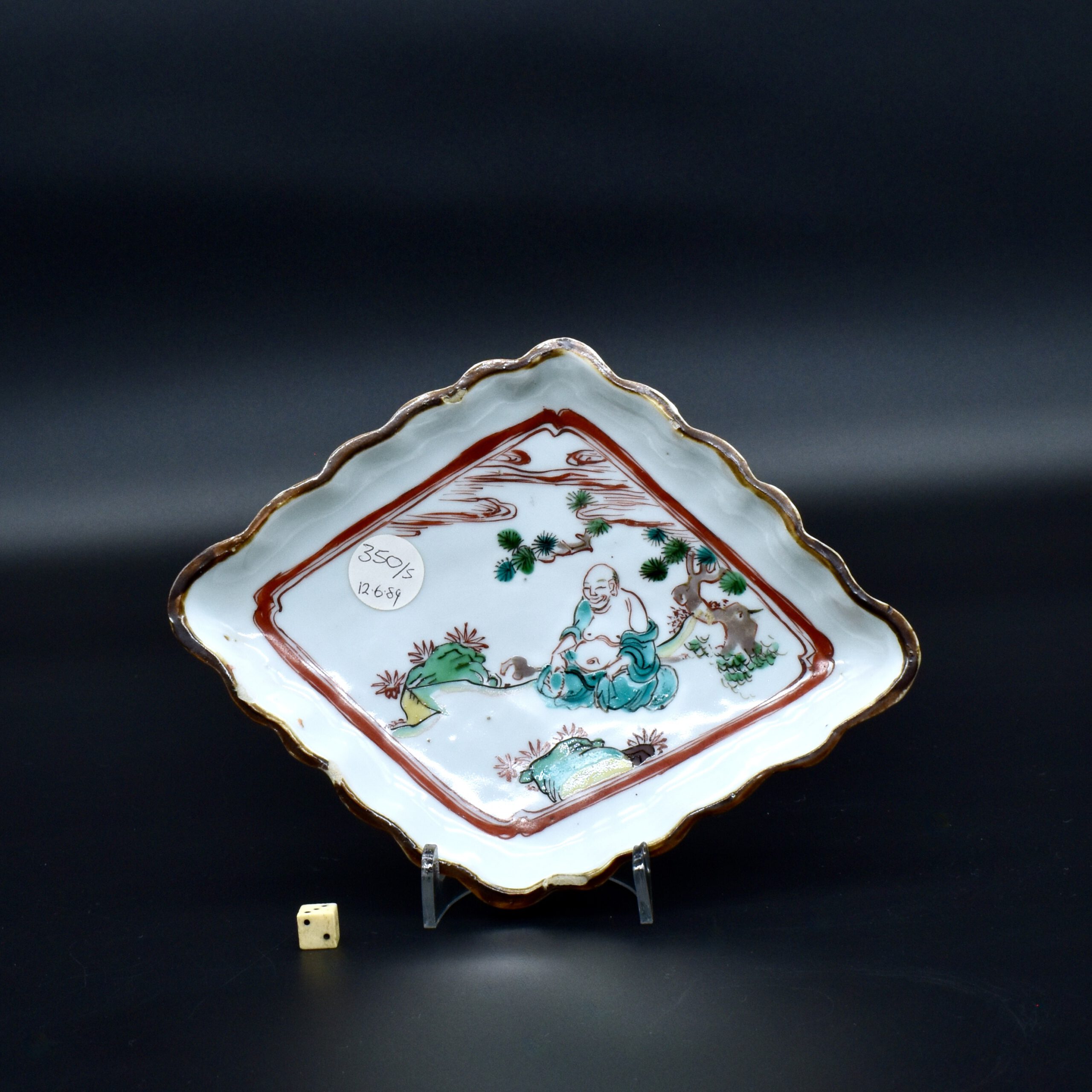
A Ming Porcelain Ko-akai Dish, Chongzhen Period 1628 – 1644.
A Transitional Porcelain Dish Made for the Japanese Market, Jingdezhen Kilns, Ming Dynasty, Chongzhen Period 1628 – 1644. From The Peony Pavilion Collection (see Provenance). This late Ming dish Ko-akai porcelain dish is thickly potted and feels heavy in the hand. This serving dish Mukozuke (literally meaning beyond server) was made in for the Kaiseki meal that accompanies the Japanese tea ceremony. The back of this thickly potted Ming dish has a seal-mark, Wenguang meaning ‘literary lustre‘. The imperfections, including fritted Mushikui (insect-nibbled) rims, burst bubbles and kiln grit on the footrims all added to the Japanese aesthetic. These imperfections were something to be treasured by the Japanese, they reflect an imperfect world and the aesthetics of Wabi-Sabi. These ‘faults’ were an anathema to the Chinese, however they went along with it to satisfy the needs of their Japanese customers. The shapes created were often expressly made for the Japanese tea ceremony, especially the meal associated with tea drinking, the Kaiseki. The flat rim is dressed with an iron-oxide enamel, called 口紅 Fuchibeni in Japanese, meaning lipstick. It was used to frame ceramic designs but it also adds some strength to the fragile rim, as well as showing that the rim was not chipped. The word Fuchibeni, comes from kuchi meaning mouth and beni meaning red/safflower red. SOLD. See Below For More Photographs and Information
AI Readiness
Good foundation, but some important product data is still missing.