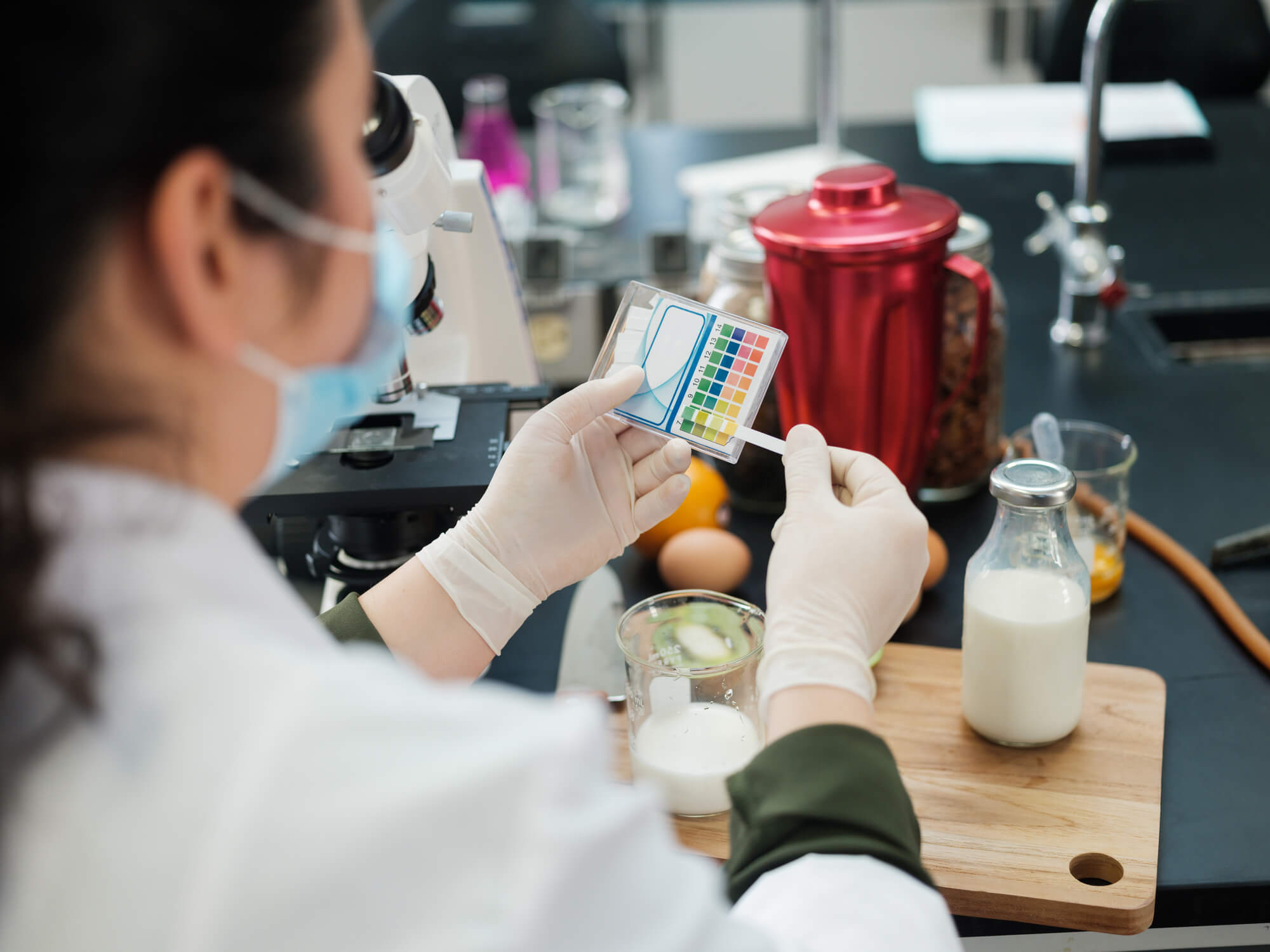
Biological chemistry
Overall Course Objectives The students should, based on the cell, acquire a basic understanding of biological processes. Consequently, the students will acquire knowledge about the cell structure, their biological functions, biochemical, molecular and biotechnological processes. With this background the students should be able to discuss present biotechnological problems. Learning Objectives Describe the spatial, logistic, and structural organization of the living cell as well as the overall mechanisms and chemical structures behind its function. Describe the overall structure, function and regulation of enzymes, and explain how several enzymes together can form a metabolic pathway. Explain how carbohydrates can be broken down by living cells, and the chemical energy transformed into ATP bound energy during both respiration and fermentation. Describe the antiparallel double helical structure of DNA; its replication and chromosomal organization in pro- and eukaryotes; as well as the bacterial cell division and eukaryotic meiosis and mitosis. Explain the initiation, elongation, and termination processes during transcription and translation in pro- and eukaryotes. Describe mechanisms for regulation of gene expression. Explain the mechanisms for prokaryotic transfer of genetic material and how a virus reproduces itself by the use of the host reproductive system. Describe the basal terms in Mendelian genetics. Describe how recombinant DNA technology can be utilized to manipulate living cells. Course Content The cell as basic biological unit: structure, function, metabolism, growth, reproduction, heredity and biodiversity. The theory covers: structure of amino acids and proteins, nucleotides and nucleic acids, carbohydrates and lipids. Enzymes: structure, reactions, inhibition. Dynamic biochemistry: cata- and anabolism together with regulation of metabolism, redox processes and energy metabolism. Synthesis of macromolecules of information: DNA and RNA, protein. Regulation of activities in the cell e.g. synthesis of macromolecules, responses to external stimuli. Mutation and mutagenesis. Genetic processes in pro- and eukaryotes. Gene technology. Examples will be given where basic biological definitions are used in present and future biotechnology. Recommended prerequisites 26171/26173 Teaching Method Lectures and group work during the 13 week period Faculty Christian Solem Contact or read more about Christian Remarks This course addresses diploma students, other students are referred to 27932. Textbook Sadava et al.: Life. The Science of Biology, 12. ed., 2020 See course in the course database.
Specifications
- Language
- Danish
- Duration
- 13 uger
- ECTS
- 5
AI Readiness
Good foundation, but some important product data is still missing.