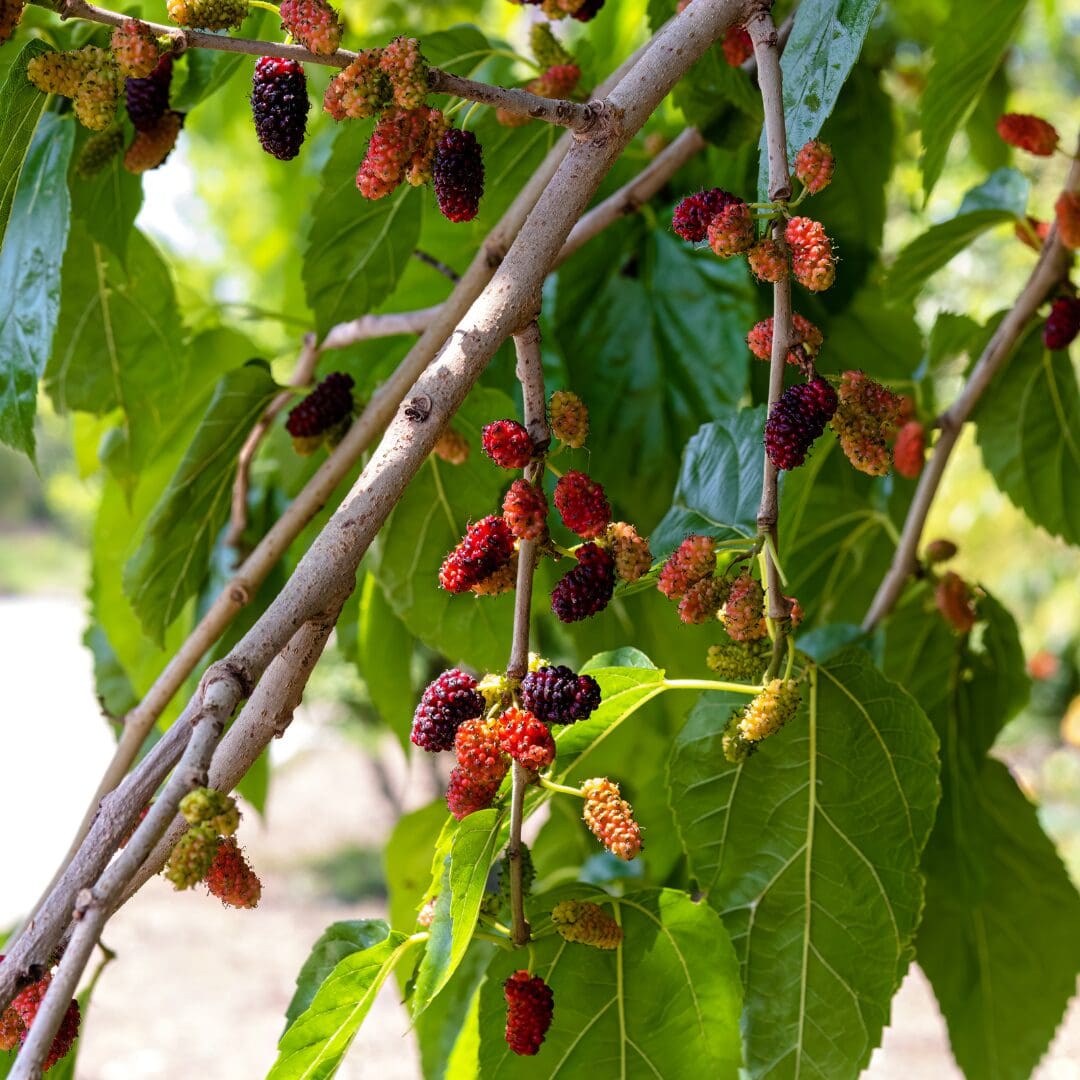
Red Mulberry (Morus rubra)
Red Mulberry (Morus rubra) is a deciduous understory tree with fruit that provides an important food source for songbirds. Though Red Mulberry has a long history of use by both native peoples and Appalachian settlers, use caution when growing this tree as its sap and unripe berries are poisonous to humans. These trees have a short trunk and broad rounded crown. Red Mulberries can have resistance to deer, drought, fire and pollution. Light: Full Sun, Partial Sun Moisture: Medium to Moist Soil Type: Rich, Well-Drained, Sandy, Loamy, or Clay Soil pH: 5.5 – 7 Average Height: 30- 70 Feet Flowers: small, inconspicuous, greenish-yellow or pale green, and appear in 1-2 inch long, slender, drooping catkins Bloom Time: March- May Leaves: 8 inches long, ovate and with or without lobes; tip elongate, bright yellow in the fall Fruiting Season: June- August Native Region: Eastern and Central North America Wildlife: Larval host for the Mourning Cloak Butterfly Additional Notes: *Important things to be aware of when cultivating this plant; the sap and unripe berries are poisonous to humans causing contact dermatitis, hallucinations, and stomach upset. When the fruits are ripe they have a short shelf life, resemble sweet blackberries and are eaten fresh or enjoyed on jellies, jams, and wines.
AI Readiness
Good foundation, but some important product data is still missing.