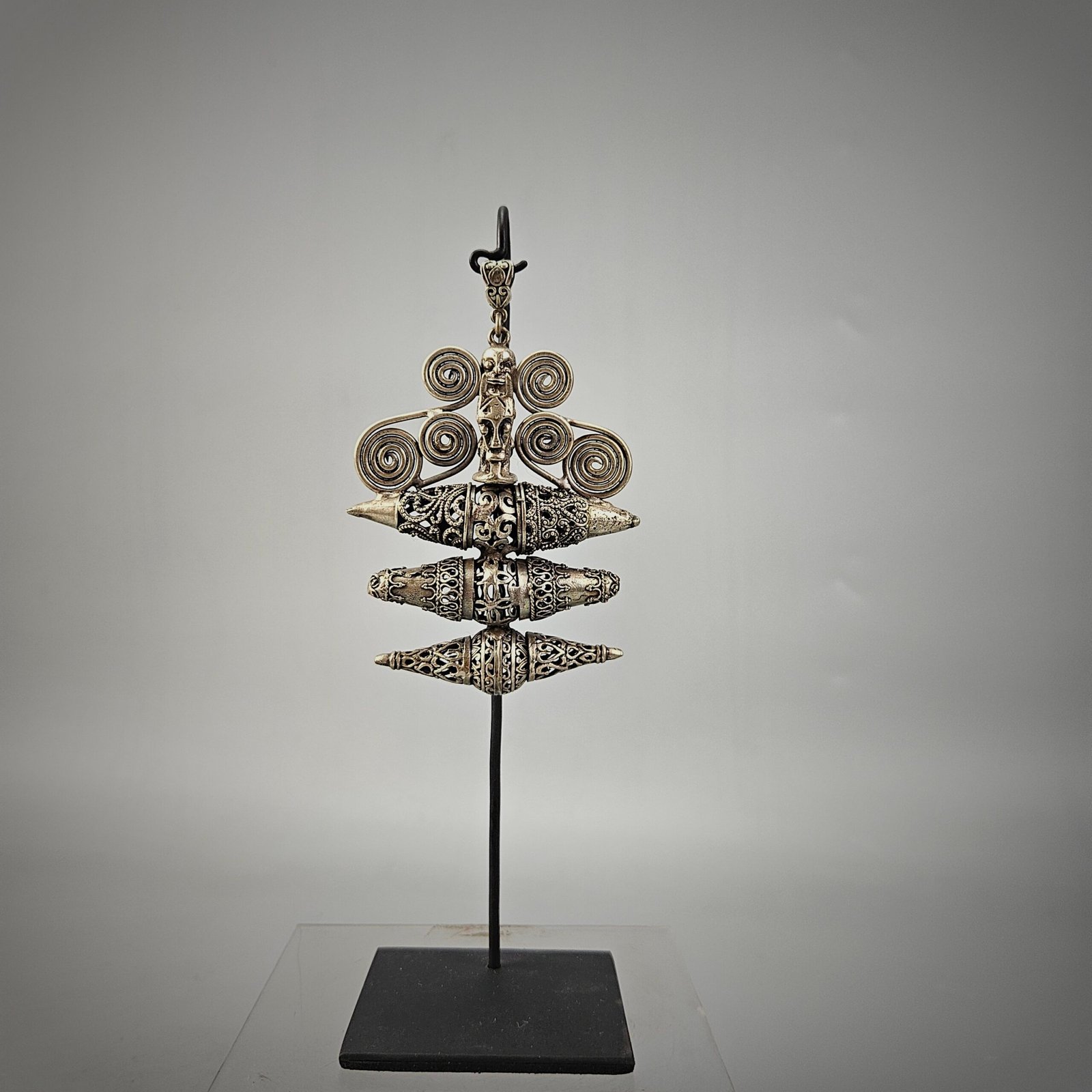
Batak New Silver Royal Pendent
Batak Royal Pendant (New Silver) Culture: Batak, North Sumatra, Indonesia Material: New Silver (nickel silver alloy) Dimensions: 9 × 6 × 2 cm Weight: 46 g Height with Stand: 17.5 cm Display Weight: 87 g Price include custom stand and shipping by DHL worldwide. This exceptional Batak Royal Pendant embodies the refined metalworking traditions of the Batak peoples of North Sumatra, where jewelry served not merely as adornment but as a visible expression of status, lineage, and spiritual authority. Executed in new silver and displaying an extraordinary level of craftsmanship, the pendant combines symbolic iconography with intricate openwork filigree, creating a composition of remarkable visual complexity and ceremonial presence. At the center rises a stylized ancestral figure, rendered in the distinctive sculptural vocabulary associated with Batak ritual art. Such figures often represent revered forebears or protective spiritual beings, emphasizing the close relationship between ancestry, authority, and social identity within Batak culture. Surrounding the figure are elegantly formed spiral motifs, among the most enduring symbols in Austronesian decorative traditions. These spirals evoke concepts of continuity, vitality, and the cyclical nature of life, reinforcing the pendant’s connection to both worldly prestige and spiritual protection. The lower section is composed of three horizontally arranged, hollow filigree elements, each meticulously constructed from delicate silver wirework and pierced ornamentation. The elaborate openwork creates a striking interplay of light and shadow, while demonstrating the remarkable technical skill required to produce such finely detailed metal objects. Every surface is enriched with scrolling patterns, granulation-inspired textures, and carefully balanced geometric forms that reveal the influence of long-established Batak silversmithing traditions. Historically, pendants of this type were associated with individuals of elevated rank and were worn during important ceremonial occasions, communal gatherings, and rites of passage. Beyond their decorative appeal, they functioned as symbols of prestige, inherited wealth, and cultural identity, linking the wearer to both ancestral heritage and social standing.
AI Readiness
Good foundation, but some important product data is still missing.