Choji Hamon Katana – T10 Steel, Wave Tsuba
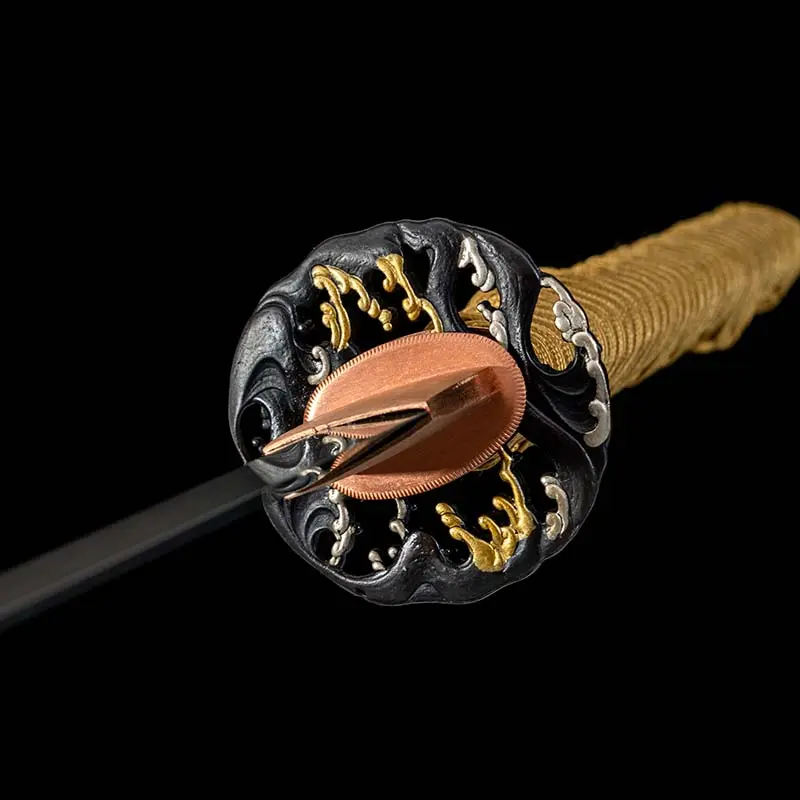
T10 Katana with a Real Choji Hamon and Wave Fittings Hang this katana on your wall and guests stop talking. They walk closer. They look at the blade first — those cloud-like clusters along the edge. Then the waves on the guard. Then they ask the price. I have watched this happen at shows. This choji hamon katana is built for that moment. T10 steel. Clay tempered. The choji pattern is the hardest hamon we make. Every blade comes out different. That is the nature of clay tempering. What Sets It Apart at This Price Most katana at this level carry a simple wavy hamon. It looks fine. But choji takes more skill. The smith paints the clay thicker in some spots, thinner in others. The quench draws those clove-bud clusters out of the steel. If the clay is wrong, the pattern breaks. We redo those blades. A choji hamon katana costs more because of that work — and collectors know it. The fittings match. The wave motif runs from the tsuba to the kashira. Many katana mix random fittings from different sets. This one reads as one set, designed together. A Closer Look The blade When we clay temper this blade, we use T10 tool steel. About 1.0% carbon. The edge hardens to 55–60 HRC. The choji clusters rise along the edge like buds. This hamon pattern, very beautiful, every blade is different. Look at the kissaki in the photos. The pattern flows into the tip. The hamon is definately real — no acid, no paint. The fittings The tsuba is black bronze, open-worked with rolling waves. Silver spray. Gold crests. Turn it in the light and the open-work glows. The kashira carries the same wave. The habaki is pure copper, plain and solid. It seats the blade tight in the saya. The wave inlay catch the light beautifully. The tsuka and saya Gold ito over pale rayskin. Tight diamond wrap. The pale skin shows through the windows. The saya is deep green lacquer with gold flecks, hand-laid, wich means no two are alike. The gold sageo matches the ito. If you like wave design, this one is for you. Specifications Blade steel: T10 high-carbon tool steel, hand forged Temper: clay tempered, real choji hamon Edge hardness: 55–60 HRC Tang: full tang Habaki: pure copper Tsuba / kashira: black bronze, open-work wave motif (gold and silver inlay) Tsuka: genuine rayskin, gold ito diamond wrap Saya: deep green lacquer with gold flecks, gold sageo Blade length (nagasa): 28.7′ Tsuka length: 10.24′ Options: sharpened or unsharpened; cotton sword bag; engraving on request NOTE: Oil the blade monthly. Wipe off fingerprints the same day. No rust has occured on blades we store oiled and dry. FAQ Q: What is a choji hamon? A: Rows of clove-bud clusters along the edge. The smith shapes them with clay before the quench. Harder to make than a plain wavy hamon. Each blade’s pattern is unique. Q: Is this katana for cutting or collecting? A: Both. It is full tang T10, so it cuts. But the mirror polish and choji pattern make it a display piece first. It is good blade for tameshigiri, but expect working marks if you cut. Q: Do you have other T10 katana? A: Yes. If you prefer plum blossom over waves, look at our T10 katana with plum blossom tsuba. This choji hamon katana carries the hardest hamon we make, on one of the toughest steels we use. If you want a blade that stops guests mid-sentence, this is it. We do our best to make every sword good. Questions? Email us.
Specifications
- HAND SHARPENING
- Hand Sharpened, Unsharpened
How AI sees this product
The more complete this product's details, the more confidently AI assistants can understand and recommend it.