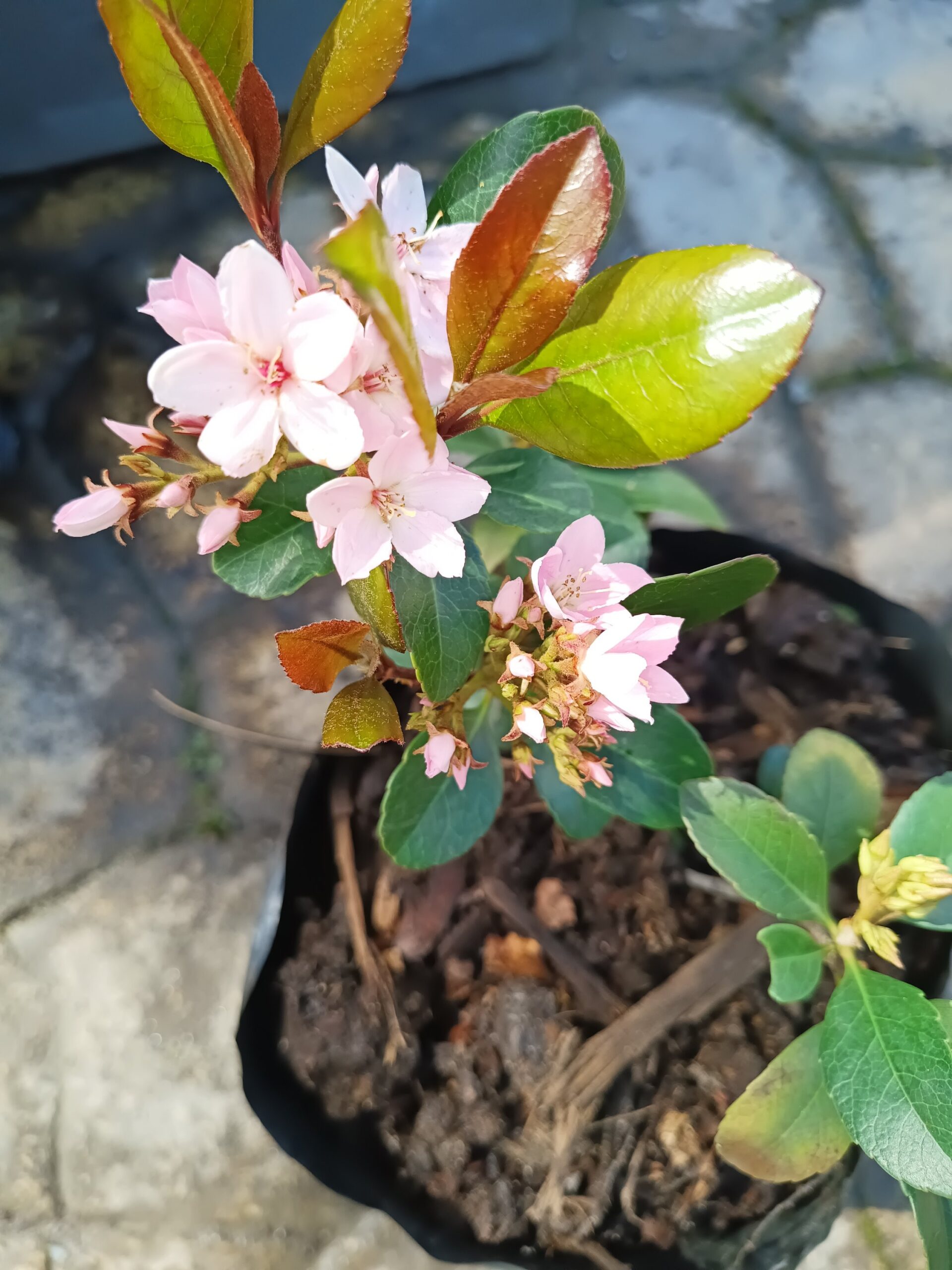
Raphiolepsis (Indian Hawthorn) 10L
🌿 Raphiolepis indica – Indian Hawthorn Common Names: Indian Hawthorn, India Hawthorn Botanical Name: Raphiolepis indica Plant Type: Evergreen shrub Origin: China and southern Japan Indigenous to South Africa: ❌ No Edible: ⚠️ Berries are not considered edible for humans and should not be consumed. ☀️ Sun Prefers full sun to light shade. Best flowering and most compact growth occur with 4–6+ hours of sunlight daily. In very hot areas, some afternoon protection can be beneficial. 💧 Water Water regularly while establishing. Once established, it is moderately drought tolerant. Allow the top layer of soil to dry slightly between watering. Avoid constantly wet or waterlogged soil, which can lead to root problems. 🌱 Soil Performs best in well-drained, fertile soil. Adaptable to sandy, loamy and slightly clay soils provided drainage is good. Prefers slightly acidic to neutral soil, approximately pH 5.5–7.0. Incorporate compost or well-rotted organic matter before planting. 📏 Height & Width Height: Approximately 1–2 m Width: Approximately 1–2 m Growth can be maintained smaller with regular pruning. 🌿 Growth Rate Slow to moderate. Forms a dense, naturally rounded shrub with attractive evergreen foliage. 🌸 Flowers Produces clusters of small pink to white, fragrant flowers. Main flowering generally occurs in spring, with flowering sometimes continuing into early summer depending on conditions. Flowers are attractive to bees and other pollinating insects. 🍒 Fruit Produces small blue-black to purple berries after flowering. The berries can provide food for birds. ✂️ Pruning Naturally develops an attractive rounded shape and often requires little pruning. Prune lightly after flowering to maintain shape and encourage dense growth. Remove dead, damaged or crossing branches as necessary. Avoid excessive pruning if you want maximum flowering. 🌬️ Wind & Coastal Conditions Moderately wind tolerant once established. Has some tolerance of coastal conditions and salt spray, making it useful in suitable coastal gardens. Protection from strong prevailing winds is beneficial. ❄️ Frost Moderately frost tolerant once established, but young plants should be protected from severe frost. Plant in a sheltered position in areas that experience hard winter frosts. 🌳 Landscaping Uses Excellent for: Low hedges Informal borders Foundation planting Shrub beds Containers and large pots Courtyards Coastal gardens Mass planting Low-maintenance gardens Pollinator-friendly gardens 🐝 Wildlife Value The flowers attract bees and other pollinators, while the berries can be attractive to birds. 🌱 Planting & Care Plant in a sunny position with good drainage. Water deeply and regularly during the first growing season to encourage a strong root system. Once established, reduce watering as the plant becomes more drought tolerant. Feed in spring with a balanced slow-release fertiliser and maintain a layer of organic mulch around the root zone, keeping it away from the main stem.
How AI sees this product
The more complete this product's details, the more confidently AI assistants can understand and recommend it.