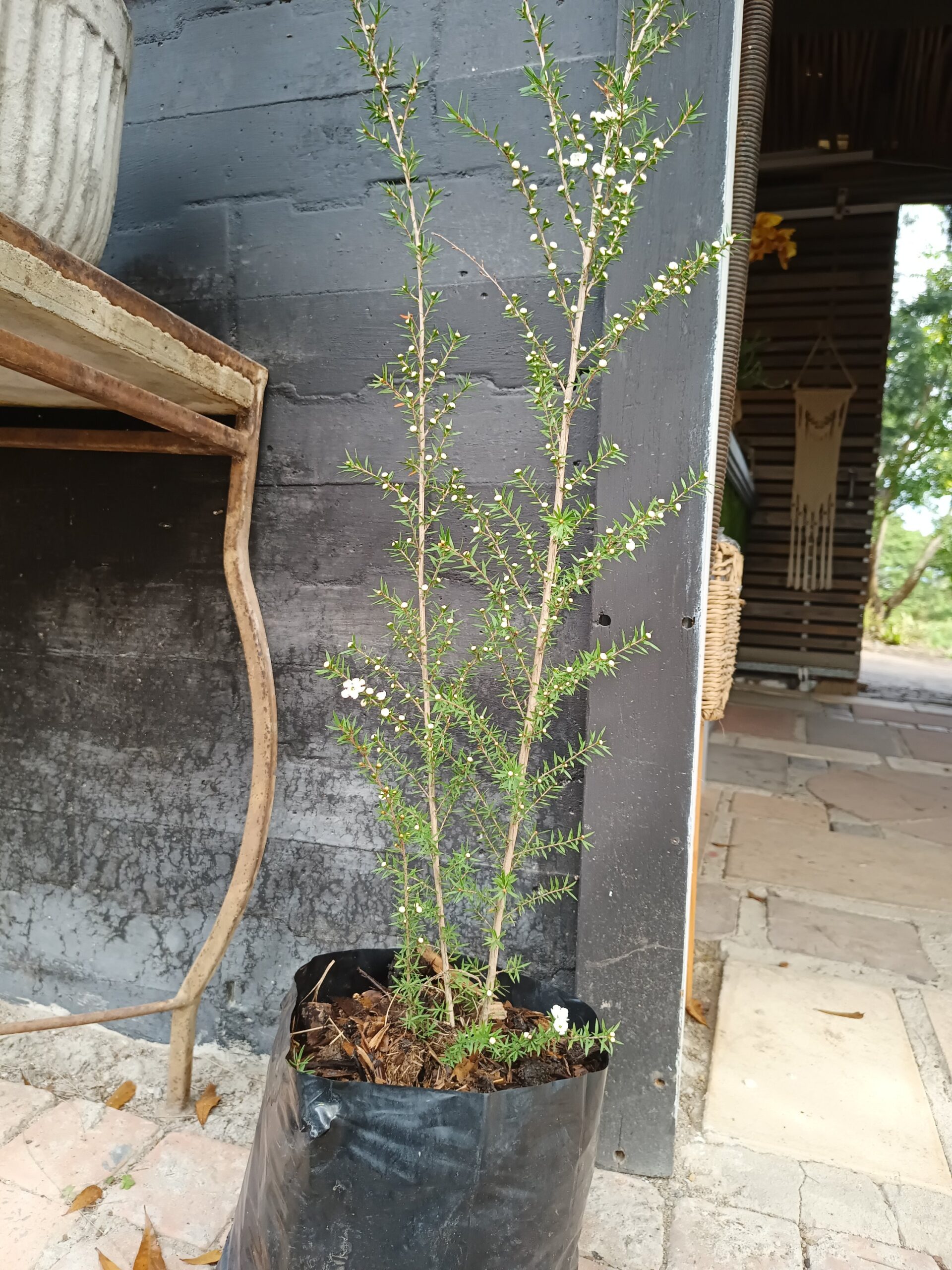
Leptospernum Scoparuim Tea Bush
Leptospermum scoparium – New Zealand Tea Tree Botanical Name: Leptospermum scoparium Common Names: New Zealand Tea Tree, Manuka, Tea Tree Family: Myrtaceae Origin: New Zealand and southeastern Australia Type: Evergreen shrub 🌿 Growing Conditions ☀️ Sun: Full sun to light shade. Best flowering and strongest growth occur in full sun, with at least 5–6 hours of direct sunlight daily. 💧 Water: Moderate water requirements. Water regularly while establishing, then allow the soil to dry slightly between watering. Once established, it is relatively drought tolerant. Avoid constantly wet soil. 🌱 Soil: Prefers well-drained, slightly acidic to neutral soil. It performs well in sandy, loamy or organically enriched soils. Good drainage is essential. 🌡️ Temperature: Adaptable to a range of climates. Performs particularly well in mild temperate and Mediterranean conditions. Protect young plants from severe frost. ❄️ Frost: Moderately frost tolerant once established, but young plants should be protected from heavy or prolonged frost. 📏 Height: Typically 1.5–3 m, depending on cultivar and growing conditions. Some forms can grow larger. ↔️ Width: Approximately 1.5–2.5 m. 🌸 Flowers: Produces masses of small, delicate white, pink or reddish flowers, generally in spring to early summer. Some cultivars can flower for an extended period. 🍃 Foliage: Fine, narrow, aromatic green leaves that remain evergreen in suitable climates. 🌿 Growth Rate: Moderate to fast-growing when young, particularly with adequate sunlight, drainage and moisture. ✂️ Pruning & Maintenance Prune lightly after flowering to maintain a compact, bushy shape and encourage branching. It responds well to regular shaping but avoid cutting heavily into old, leafless wood. 🪴 Container Growing Excellent for large containers provided the pot has excellent drainage. Use a quality, free-draining potting mix and avoid allowing the roots to remain waterlogged. 🌳 Landscaping Uses Feature shrub Informal hedge or screening Coastal gardens Cottage and wildlife gardens Mediterranean-style gardens Large containers Pollinator-friendly planting Windbreaks 🐝 Wildlife Value The flowers are attractive to bees and other pollinating insects, making it a useful addition to pollinator-friendly gardens. 🌿 Indigenous / Edible Indigenous: ❌ Not indigenous to South Africa. It is native mainly to New Zealand and southeastern Australia. Edible: ⚠️ Although Leptospermum species have a long history of traditional use and are associated with mānuka honey, do not market the plant itself as an edible herb or recommend consuming its leaves without species-specific guidance.
How AI sees this product
The more complete this product's details, the more confidently AI assistants can understand and recommend it.