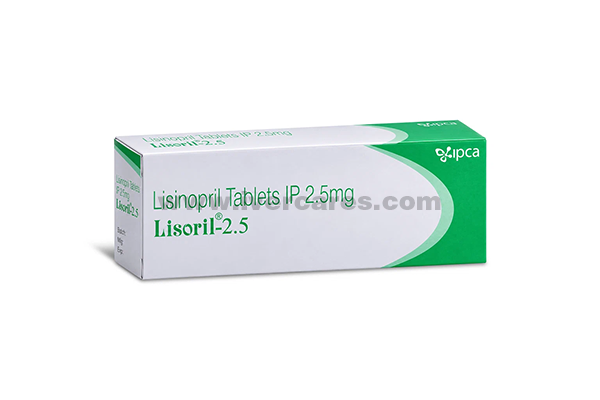
Lisoril 2.5 mg
Lisoril 2.5 mg is a tablet that gently relaxes your blood vessels to help lower your blood pressure and ease the load on your heart. It is also used to protect the kidneys in people with diabetes and to support recovery after a heart attack. Take it exactly as your doctor prescribes, and don’t stop it without asking them first. It is not the same as insulin Lisoril, which is an injection. Key Features About Lisoril 2.5 mg Drug class: Angiotensin Converting Enzyme (ACE) Inhibitor Chemical class: Dipeptides Product Details Active Ingredients Lisinopril Inactive Ingredients Calcium phosphate Mannitol Magnesium stearate Starch Dosage Form Tablet Route of administration Oral Packaging Blister Pack Strength 2.5 mg Used for High Blood pressure Manufacturer Ipca Laboratories Ltd Shelf life 24-36 months after the manufacturing date Storage Instructions Store at room temperature away from sunlight and moisture MECHANISM OF ACTION Lisinopril stops the Angiotensin Converting Enzyme (ACE) from working. This stops the body from producing Angiotensin II, a chemical that naturally narrows blood vessels. Without angiotensin II, the blood vessels widen and relax thereby lowering overall blood pressure. USES Hypertension Symptomatic heart failure Diabetic nephropathy protection Post-myocardial infarction management SIDE EFFECTS Common: Dry cough, dizziness, headache, hyperkalemia, hypotension, etc. Serious: Angioedema, acute kidney injury, severe hypotension, hyperkalemia, etc. INTERACTIONS Diuretics: Taking Furosemide or Hydrochlorothiazide with Lisinopril can make your blood pressure drop very low or put a lot of stress on your kidneys. Potassium supplements, salt substitutes, and potassium-sparing diuretics: Potassium can become too high , which can be unsafe. Some drugs such as Spironolactone and Eplerenone may cause this . Over the counter pain meds like Ibuprofen and Naproxen can interact with blood pressure meds and increase risk of kidney problems. Medications for diabetes like Insulin and oral hypoglycemic agents can increase the chance of developing low blood sugar. Antibiotics Medications such as Cotrimoxazole and trimethoprim may increase the risk of hyperkalemia (excess potassium in the blood). Other antihypertensives like Beta blockers and calcium channel blockers cause excessive blood pressure drop. Lithium: Lisinopril may raise lithium levels to unsafe levels. Other RAAS drugs: Taking RAAS drugs with ARBs (like Losartan) or Aliskiren raises the risk of low blood pressure, high potassium, and kidney damage. Because of the risk of angioedema, sacubitril and valsartan should not be taken with or within 36 hours of lisinopril. PRECAUTIONS Strictly unsafe during pregnancy, as it can harm the developing baby. Stop and consult your physician immediately if you become pregnant or are planning to conceive. Use with caution or avoid, as the medication can pass into breast milk. Do not take it if you have a history of angioedema (swelling of the face, lips, tongue, or throat), whether related to this medicine or otherwise. Do not use it if you are allergic to lisinopril, other ACE inhibitors, or any ingredient of the tablet. Do not suddenly stop the medication, as this can cause a rebound spike in blood pressure. Rise slowly from a sitting or lying position. Do not drive or operate machinery until you know how you react to this medicine. Avoid or limit alcohol, which can make you more dizzy and lower your blood pressure even more. Not recommended for children < 6 years or in severely reduced kidney function. Regular check-ups are advised to monitor blood pressure, kidney function and potassium levels. CONCLUSION Lisoril 2.5 mg (Lisinopril) is an ACE inhibitor prescribed for high blood pressure, symptomatic heart failure, protection of the kidneys in diabetes, and care after a heart attack. For best results, take it at the same time every day, with or without food, exactly as prescribed. Do not stop it suddenly, and avoid it during pregnancy. Use as directed by your healthcare provider. Be sure to go for regular check-ups to keep your condition well controlled. FAQ #sp-ea-24524 .spcollapsing { height: 0; overflow: hidden; transition-property: height;transition-duration: 300ms;}#sp-ea-24524.sp-easy-accordion>.sp-ea-single {margin-bottom: 25px; border: 1px solid #e2e2e2; }#sp-ea-24524.sp-easy-accordion>.sp-ea-single>.ea-header a {color: #0a0a0a;}#sp-ea-24524.sp-easy-accordion>.sp-ea-single>.sp-collapse>.ea-body {background: #ffffff; color: #0a0a0a;}#sp-ea-24524.sp-easy-accordion>.sp-ea-single {background: #ffffff;}#sp-ea-24524.sp-easy-accordion>.sp-ea-single>.ea-header a .ea-expand-icon { float: right; color: #0a0a0a;font-size: 16px;}#sp-ea-24524.sp-easy-accordion>.sp-ea-single>.ea-header a .ea-expand-icon {margin-right: 0;} 1) What is Lisoril 2.5 mg used for? Lisoril 2.5 mg is used for the treatment of high blood pressure and symptoms of heart failure. It is also used for kidney protection in diabetic nephropathy and for management after a heart attack. 2) Is Lisoril 2.5 mg the same as insulin Lisoril? No. Lisoril 2.5 mg is a lisinopril tablet. Insulin Lisoril is a different medicine, given by injection and measured in units. 3) Can I take painkillers with Lisinopril? Do not take NSAIDs (such as ibuprofen or naproxen) unless your doctor has approved it. 4) Can I use salt substitutes or potassium supplements? Combining Lisinopril with potassium can raise your levels to dangerous amounts. 5) When should I seek emergency help? Seek emergency medical attention if you experience swelling of your face, lips, tongue or throat, difficulty breathing or swallowing, or fainting.
Specifications
- Packs
- 30 Pills, 60 Pills, 90 Pills
How AI sees this product
The more complete this product's details, the more confidently AI assistants can understand and recommend it.