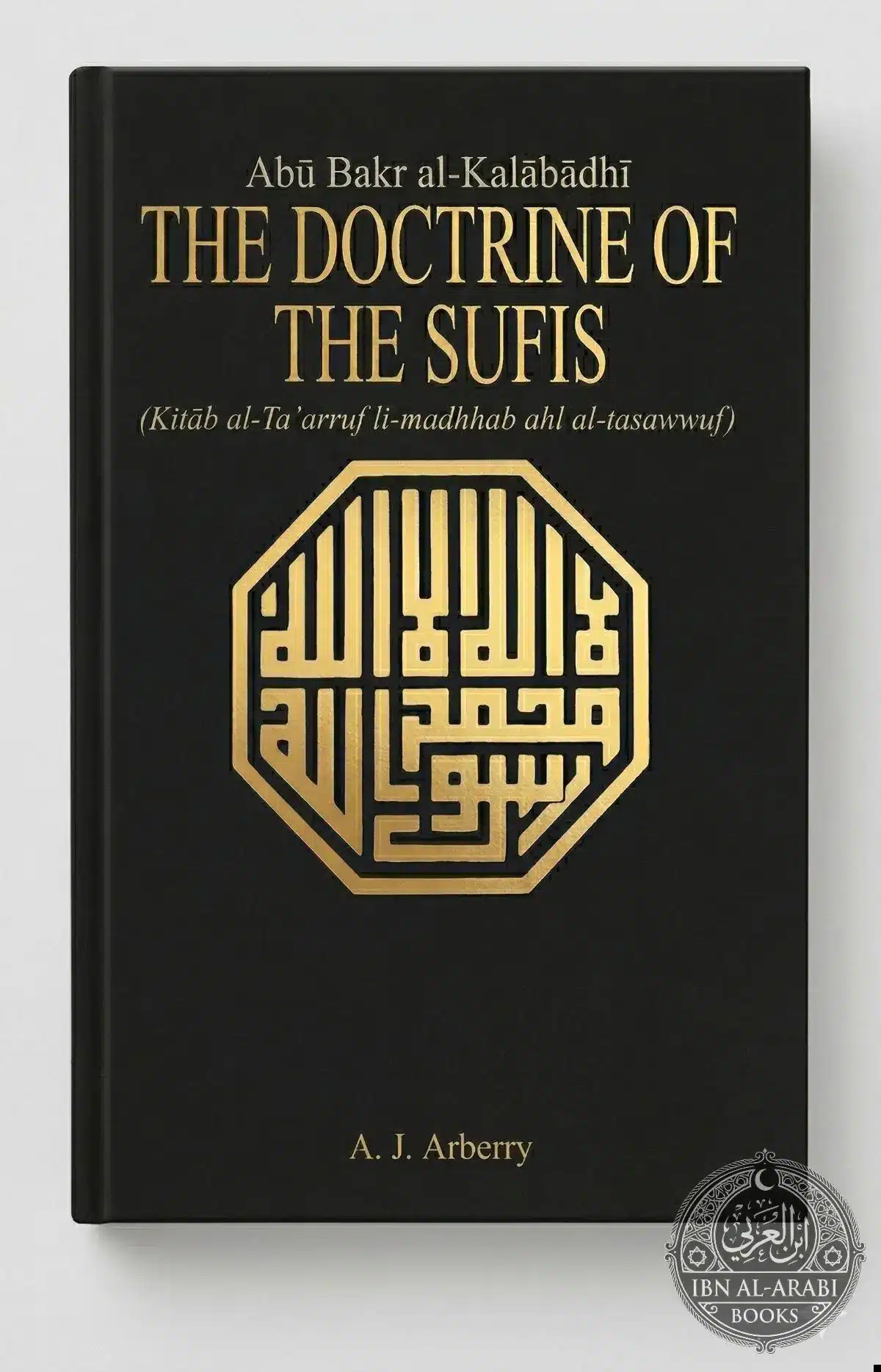
The Doctrine of the Sufis (Arabic: Kitab al-Ta’arruf li-madhhab ahl al-tasawwuf)
The Doctrine of the Sufis (Arabic: Kitab al-Ta’arruf li-madhhab ahl al-tasawwuf), written in the late 10th century by Abu Bakr al-Kalabadhi, is one of the most important formal defenses of Sufism in Islamic history. The most famous English translation was completed by A.J. Arberry in 1935. Book Description Written at a time when Sufism was facing intense scrutiny and suspicion from orthodox legalists and theologians, Kalabadhi’s primary mission was to prove that Sufism is not a “heretical” movement but is fundamentally rooted in the Quran, the Sunnah, and the consensus of the early community. The book is structured as a systematic “creed” of the Sufis, covering their views on the Nature of God, Prophecy, Predestination, and the Afterlife. It then moves into the “technical” side of the path, defining the various spiritual states (ahwal) and stations (maqamat). It remains the earliest extant work of its kind and was so influential that it inspired the famous saying: “But for the Ta’arruf, we should not have known Sufism.” Key Points 1. Alignment with Sunni Orthodoxy Kalabadhi meticulously demonstrates that the Sufis hold the same theological beliefs as the “People of Tradition” (Ahl al-Sunnah). He argues that their “inward” experiences are simply the spiritual realization of “outward” dogmas, such as the Unity of God and the Finality of Prophethood. 2. The Hierarchy of the Path The book provides one of the first clear mappings of the Stages (Maqamat) and States (Ahwal). It defines concepts that would later become standard in Sufi literature, such as: Repentance (Tawba) Patience (Sabr) Gratitude (Shukr) Love (Mahabba) 3. The Nature of “Gnosis” (Ma’rifa) Kalabadhi distinguishes between “acquired knowledge” (learning) and “bestowed gnosis” (revelation). He argues that while human effort is necessary, true Gnosis is a gift from God that bypasses the limitations of the rational mind. 4. Defense of “Intoxication” (Sukr) While Kalabadhi is “sober” in his writing, he provides a sympathetic explanation for the ecstatic utterances (shathiyat) of earlier Sufis like al-Hallaj. He explains that these individuals were “overwhelmed” by the Divine Presence and should not be judged by the standards of ordinary legal discourse. 5. The Concept of “Saintship” (Walaya) The book explores the role of the “Friends of God.” Kalabadhi explains that while Prophets receive “Revelation” (Wahy), Saints receive “Inspiration” (Ilham). He asserts that the miracles (karamat) of the saints are real and serve as a “confirmation” of the truth of the Prophet they follow. 6. Ethical Conduct (Adab) A significant portion of the work is dedicated to the “manners” of the Sufi. Kalabadhi emphasizes that the internal journey is impossible without perfect outward behavior, highlighting that the true Sufi is the one who is most disciplined in their adherence to the Shari’ah.
AI Readiness
Good foundation, but some important product data is still missing.