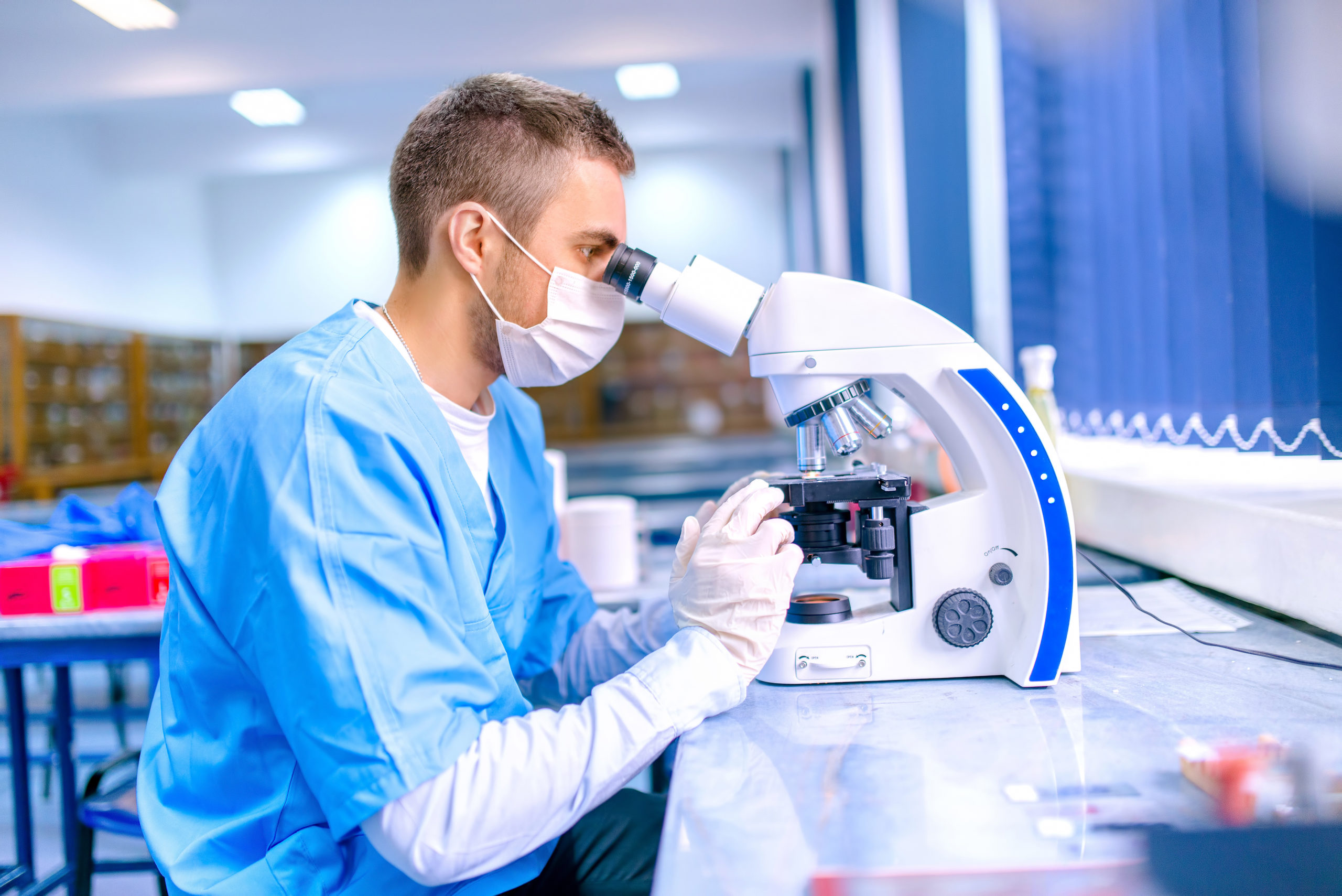
Training Program Bachelor’s Degree in Clinical Laboratory
5 YEAR RESIDENTIAL MEDICAL TRAINING PROGRAM CURRICULUM MAP STUDY PROGRAM FOR THE DEGREE IN HEALTH TECHNOLOGY IN THE CLINICAL LABORATORY PROFILE BY TOPIC AND FORMS OF EDUCATIONAL ORGANIZATION: FIRST YEAR SUBJECT: INTRODUCTION TO HEALTH TECHNOLOGY List of topics Conferences Seminars Workshop Practical class TOTAL NATIONAL HEALTH SYSTEM 1 – 6 7 THE CURRENT CUBAN UNIVERSITY 2 2 TECHNOLOGICAL TRAINING 2 – 2 CULTURAL TRAINING 1 2 3 ENVIRONMENTAL EDUCATION 2 2 ETHICS AND BIOETHICS 2 2 4 Individual project 2 Assessment 4 TOTAL 10 4 6 26 SUBJECT: IT AND RESEARCH I Topic Title Setup Sem. CP CTP EV. Total I Computer science for the management and presentation of information in research. 2 5 3 10 II Computer science in the search and recovery of information in research. 2 4 1 1 8 III Computer science in the processing of information collected during research. 4 4 8 Final seminar 4 4 Total 4 8 10 7 1 30 SUBJECT: English I. Unit Communicative functions Sample expressions Structural Elements 1 Spelling names; saying figures and telephone numbers, talking about yourself and others C- U- B- A 831 4356 I am tired Numbers and alphabet Be adjectives 2 Introducing yourself Saying what you want to do Talking about medical problems I am…/ My name is… I want to see Dr. Johnson I have diarrhea Forms of TO BE The simple present 3 Expressing possibility and ability. Possessive form. Asking and telling the time I can speak English very well. What time is the English lesson? It´s at 8 o´clock. Prepositions / simple present can 4 Describing existence There is a concert in the theatre There is…/ are… 5 Describing daily habits and routines I always start work at 8 Present simple/ adverbs of frequency 6 ____ 7 I saw the period in November _________________ I am going to work in another country The simple past Reasons with “because…” _________________ The future with going to SUBJECT: PHYSICAL PREPARATION AND SPORT I Topic Setup Seminars CTP CP E Total Physical exercise for healthy people General physical preparation 2 2 2 6 2 14 Considerations on the organization and control of physical exercises 2 2 1 1 6 Physical preparation Auxiliary sports activity – – 2 9 1 12 TOTAL 4 4 5 16 3 32 SUBJECT: INTRODUCTION TO THE CLINICAL LABORATORY Topics Organizational structure of the training Conferences CTP Seminar Research internship Total LABORATORY OBJECTIVES AND FUNCTIONS BASIC PRINCIPLES OF LABORATORY WORK 2 2 GLASSWARE AND REAGENTS 2 2 4 BIOSECURITY MEASURES FOR LABORATORY WORK 2 2 4 IV BIOLOGICAL SAMPLES 2 2 2 6 PIS 2 LABORATORY MATERIAL 2 2 2 6 MECHANIZATION AND AUTOMATION 2 2 2 6 Total 12 8 8 252 30 SUBJECT: BASIC HEMATOLOGY No. Topics Total hours C S TP 1 Leukocytes 12 6 4 2 Inter-semester exam 2 2 Anemias 12 6 4 2 3 Hemostasis 12 8 4 Subtotal 38 20 12 4 Concentrated 30 Total hours 68 SUBJECT: IT AND RESEARCH II No. Topics Setup CP CTP Eval Sem Total hours 1 Descriptive statistics 2 3 3 1 1 10 2 Population and health statistics – 3 3 – – 6 3 Elements of inferential statistics 4 3 2 1 – 10 TOTAL 6 9 8 2 1 26 SUBJECT: ENGLISH II Communicative functions Sample expressions Structural Elements Talking about things happening at the moment What are you doing? At the moment / now / right now Verb Be + -ing form of the action verb. Describing people, things and places What does she/he look like? / What is she/ he like? What is it like? Have got / has got There is / there are Making comparison My brother is younger than you Adjectives more…than …er than The …est Expressing necessity. Giving advice, making polite requests and asking for permission What should you do? Can I help you? Modal can, should, would, must, may Saying what you like and don’t like What do you like? What’s your favorite …? What kind of … do you like? I like books I like to read books I like reading books SUBJECT: PHYSICAL PREPARATION AND SPORT II Topic Setup Seminars CTP CP E Total Physical prophylactic and therapeutic culture (PPTC) 2 4 – – – 6 Therapeutic physical diagnosis. Test. Postural 2 – 2 2 2 8 General physical preparation – – – 8 2 10 Applied physical preparation – – 2 4 2 8 TOTAL 4 4 4 14 6 32 SUBJECT: GENERAL ELEMENTS OF PARASITOLOGY AND MICROBIOLOGY Topic Conference C.P. Evaluation Total 1. Microbiology. Generalities 2 2 – 4 2. Disinfection, sterilization and biosecurity 2 – – 2 3. Infectious process and microbiological diagnosis 2 – – 2 4. Sexually transmitted diseases 6 4 – 10 5. Tuberculosis and other mycobacteria 2 4 – 6 Inter-semester exam – – 2 2 6. General information on parasites 2 – – 2 7. Physical and chemical examination of stool 2 2 – 4 8. Protozoa 4 6 – 10 9. Helminths 4 6 – 10 Mid-term exam project – – 2 2 TOTAL 24 26 4 54 SUBJECT: CLINICAL CHEMISTRY Topics Conferences Practical classes. Seminars. Assessment Total 1. Hydrocarbons. 8 4 – – 12 2. Oxygenated functions 6 4 – – 10 3. Lipids 2 2 – 2 6 4. Carbohydrates 6 2 – – 8 5. Nitrogenated compounds 6 2 – – 8 Total 28 14 – 2 44 SECOND YEAR SUBJECT: ENGLISH II Unit CPILI Total 1 6 hours 6 hours Consolidation 2 hours 2 hours Assessment 2 hours 2 hours 2 2 hours 2 hours 3 2 hours 2 hours Assessment 2 hours 2 hours 16 hours SUBJECT: PHILOSOPHY AND HEALTH I CURRICULUM The conception of the world, of man and society. The world and man. Region, object and fundamental problem of philosophy. The material and the ideal. Society and the dialectical method. Applied to the social sphere. The social structure and political organization of society and class struggle. Social policy and health policy. Humanism and human rights. Man and his culture. Identity Culture Politics. Ideology and freedom. Battle of ideas. Man and diseases. The biological and the social. Determinants of the health-disease process. Biologicism and sociology. Models of thought. SUBJECT: CLINICAL LABORATORY I Topics Conferences CTP Practice in the laboratory Seminar Total I. Basic aspects of clinical chemistry. Glucose determination 2 2 2 6 II. Determination of proteins 2 2 3 7 III. Determination of some low-pm nitrogenous compounds 3 3 3 9 IV. Enzymes 3 3 3 9 PIS 3 V. Bilirubin 3 3 3 9 VI. Basic lipid determinations 3 2 2 7 Total 16 2 16 13 50 SUBJECT: CLINICAL LABORATORY II Topics Organizational structure of the training Conferences CTP Practice in the laboratory Seminar Research internship Total I. Pre-analytical phase 6 2 8 II. Analytical phase 4 2 2 8 PIS 2 2 III. Post-analytical phase 4 2 6 IV. Reference values 6 2 8 V. Preparation of the Manual of Procedures 4 2 2 8 Total 26 6 8 40 SUBJECT: HEMATOLOGY I Subjects ORGANIZATIONAL STRUCTURE OF THE TUITION Exam Setup CTP PL SEMIN. TOTAL CELL COUNTS 12 3 12 3 30 PIS 2 2 HEMATOLOGICAL STUDIES 6 2 6 2 16 Hemostasis 6 3 3 12 Total 2 24 5 21 8 60 SUBJECT: ENGLISH IV Unit CPILI Assessment Total 1. Talking about places, people and jobs 2 hours 2 hours 2. Describing different specialties 2 hours 2 hours 3. Describing hospital 2 hours 2 hours Consolidation 2 hours – 2 hours Assessment 2 hours 2 hours 4. Talking about different parts of the body 2 hours – 2 hours – 5. Giving advice 2 hours 2 hours Assessment 2 hours 2 hours SUBJECT: IT AND RESEARCH III No. Topics Setup Sem. CE CP Total hours 1 Scientific investigation methodology 2 1 5 4 12 Final seminar 4 4 TOTAL 2 5 5 4 16 SUBJECT: PHILOSOPHY AND HEALTH II The human activity 2.1. Cognitive activity. 2.1.1. The S-O relationship and sensory and rational knowledge. 2.1.2. Common knowledge and scientific knowledge. 2.1.3. Gnoseological principles and scientific method. 2.1.4. Science and technical scientific revolution. The so-called neutrality of science. Its current use and dilemmas. Science and technology – Impact on health. 2.2. Valuative activity and spiritual production. The formation of values (its role in the continuity of socialism). 2.2.1. Consciousness and its forms. 2.2.2. The moral conscience, ethics, professional ethics of the technologist and the ethics of communication. 2.2.3. Legal awareness and law. The fair use of science and technology and its results in the field of health. 2.2.4. Religious conscience. Religion, belief and science in the field of health. THIRD YEAR SUBJECT: FUNDAMENTALS OF HEALTH PSYCHOLOGY Topic C S CP E TH Subject I – Introduction to psychology 4 1 1 6 Subject II – Psychology and health 2 1 1 4 Subject III – Educational communication in health 4 2 2 8 Subject IV – Age and its relation with the health-disease process. 3 1 2 6 Subject V – Psychological reactions during the health-illness process 4 1 1 6 Project 2 2 Total 17 6 7 2 32 SUBJECT: CUBAN HISTORY WORKSHOPS No. Titles CE Total Introduction to the course 2 2 1 Nationality is the purest form of patriotism 4 4 2 Only those who obey their nation are constructive for their country 6 6 3 The fight in the present to improve the future 4 4 4 History will absolve me 4 4 5 The world only respects those who have founded and battled 6 6 6 Internationalism, the most beautiful flower of the Revolution. 4 4 Presentation of research projects 4 4 Total 34 SUBJECT: CLINICAL LABORATORY III Topics Organizational structure of the training Conferences CTP Practice in the laboratory Seminar Research internship Total I – Hydromineral balance 6 2 2 10 II – Basic acid balance 14 2 4 20 Total 20 4 6 30 SUBJECT: HEMATOLOGY II Unit Topics Hours Total C S TP I Anemias. Generalities 2 2 Study of nutritional anemias 8 2 2 4 Study of anemias Hemolytics 6 2 2 2 Inter-semester exam 2 II Physiology of hemostasis 2 2 – The coagulogram 6 2 4 Integrative seminar 2 2 Subtotal 28 Education internship at work 24 Total 52 10 6 10 SUBJECT: CLINICAL BIOCHEMISTRY I Subjects CLASS (HRS) 1 – Introduction to biochemistry. Biomolecules. 2 2 – Structural and functional characteristics of carbohydrates. 4 3 – Structural and functional characteristics of lipids. 4 4 – Structural and functional characteristics of amino acids. 4 5 – Structural and functional characteristics of proteins. 4 6 – Structural and functional characteristics of nucleic acids. 4 7- Structural and functional characteristics of vitamins. 2 PIS 2 TOTAL 26 SUBJECT: DISSERTATION PREPARATION I-II Subjects C DG CTP CP TI E T 1. Introduction and general points 2 2 2 6 2. Effects of disasters on health 4 2 6 3. Health sector organization 2 2 2 2 2 10 4. Operation of field hospitals. Technical profiles activity. 2 2 2 2 2 10 5. Mass handling of corpses 2 2 2 6 Final assessment 2 2 Total 8 10 8 6 6 2 40 SUBJECT: INSTRUMENTAL ANALYSIS No. Subjects Hours Setup Sem. LAB practice 1 Automated management systems in the laboratory 2 2 2 Measuring equipment 4 2 2 3 Electrical induction equipment 4 2 2 Inter-semester exam 2 4 Fractionation equipment 4 4 5 Image amplification, processing and preservation 2 2 6 Biosignal recorders 2 2 7 Immunochemistry 8 4 2 2 8 Hematological complexes and clot meters 4 2 2 Total hours 32 20 6 4 FOURTH YEAR SUBJECT: PEDAGOGY Topics Class-meeting Seminar Practical class Extra-class work Total I. The education process 2 – – – 2 II. The teaching-educational process 2 – – 2 III. Components of the teaching-educational process 6 2 8 IV. The evaluation of learning 3 1 4 Total 13 3 16 SUBJECT: CLINICAL LABORATORY IV No. TOPICS Total hours Setup Sem 1 Biological fluids and general points 2 2 2 LCR and SNC 4 2 2 3 Fluids for digestive functions 6 6 Inter-semester exam 2 4 Seminal fluid and fertility of the couple 6 4 2 5 Synovial fluid and joint diseases 2 2 6 Amniotic fluid 4 2 2 7 Other liquids 2 2 Total 28 20 6 SUBJECT: GENERAL IMMUNOLOGY DIAGNOSTICS No. TOPIC Teaching method Total hours Conf. Sem. Antigens 2 2 – Antibodies 6 2 2 Antigen – antibody interaction 6 4 2 Inter-semester exam 2 Complement system 6 4 2 Dynamics of the immune response 6 4 2 Application in the clinical laboratory 4 2 2 Immunological methods Total hours 30 18 10 SUBJECT: IT AND RESEARCH IV No. Topics Setup Workshop classes Sem CP Total hours 2 Practical research in the profession 2 8 2 6 18 Final seminar – – 8 – 8 TOTAL 2 8 10 6 26 SUBJECT: PUBLIC HEALTH Topics ORGANIZATIONAL STRUCTURE OF THE TUITION TOTAL Setup Sem. Workshop ET Assessment I. Public health fundamentals 2 – – – – 2 II. Health research 1 1 – – – 2 III. State of health of the population Analysis of the health situation of the community 4 4 4 – – 12 IV. Diseases and other health damage 2 2 2 – – 6 V. Health interventions 2 – 2 – – 4 VI. Health surveillance 2 2 – – – 4 Total 13 9 8 – 2 32 SUBJECT: CLINICAL LABORATORY SERVICES MANAGEMENT No. Topics Teaching methods Total Setup TP Sem. 1 Communication 6 2 2 2 2 Administration 6 4 – 2 3 Leadership and group work 6 4 – 2 4 Administration applied to the laboratory 8 4 2 2 Subtotal 26 14 4 8 Education at work 64 Total hours of the subject 90 SUBJECT: LABORATORY CORRELATION No. Topics Total Setup Sem. TP 1 Hematopoietic syndromes 6 4 2 2 Digestive syndromes and liver disease 4 2 2 3 Cardiovascular syndromes, respiratory syndromes and CNS disease 6 4 2 Partial assessment 2 4 Nephrological, endocrine-metabolic syndromes and reproductive system diseases 6 4 2 5 Musculoskeletal and immunological syndromes 4 2 2 6 Critical patient 2 2 Partial assessment 2 Total hours 32 16 4 6 SUBJECT: ETHICS AND BIOETHICS SUBJECT CLASS/ORIENTATION SEMINAR TOTAL I – Ethics and moral 2 hours ————— 2 II – Ethics of science and technology 2 hours 2 hours 4 III – Medical ethics and bioethics 2 hours 4 hours 6 IV – Ethics of Cuban health workers 4 hours 4 hours 8 TOTAL 10 hours 10 hours 20 hours SUBJECT: CLINICAL BIOCHEMISTRY II Topics CLASS (HRS) 1 – Introduction to the intermediate metabolism 4 2 – Cell breathing 4 3 – Carbohydrate metabolism 6 4 – Lipid metabolism 6 5 – Protein metabolism 4 6 – Integration of the intermediate metabolism 4 7 – Specialized biochemistry 6 PIS 2 TOTAL 36 FIFTH YEAR PREPROFESSIONAL PRACTICE Modular plan: MODULE UNITS WEEKS 1. Specialization laboratory (7 weeks) Nephrology Blood gases Biological fluids Endocrine 2 2 2 1 2. Biochemistry (4 weeks) General points and carbohydrates Proteins and nitrogenous compounds Enzymes Lipids 1 1 1 1 3. Special Hematology (9 weeks) Study of anemias Cytomorphology Coagulation 3 3 3 Subjects Total Nephrology 80 Blood gases 80 Biological fluids 80 Endocrine 40 Carbohydrates 40 Proteins and nitrogenous compounds 40 Enzymes 40 Lipids 40 Study of anemias 120 Cytomorphology 120 Coagulation 120 TOTAL 800 MODULES ROTATIONS ET Total hours Specialization laboratory 1 Nephrology 120 120 2 Blood gases and Ionograms 120 120 3 Biological fluids 120 120 4 Endocrine 120 120 MODULES ROTATIONS ET Total hours Biochemistry 1 General points and carbohydrates 120 120 2 Enzymes 120 120 3 Lipids 120 120 4 Proteins and nitrogenous compounds 120 120 Special hematology 5 Study of anemias 120 120 6 Cytomorphology 120 120 7 Coagulation 120 120 In this fifth year the student will carry out education activities at work for 40 weeks.
How AI sees this product
The more complete this product's details, the more confidently AI assistants can understand and recommend it.