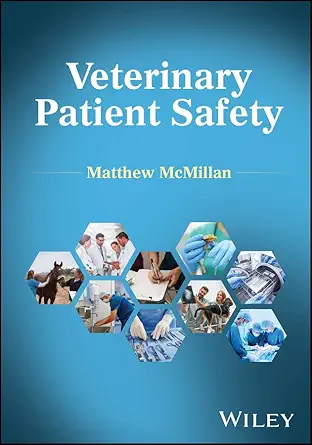
Veterinary Patient Safety (Original PDF from Publisher)
Veterinary Patient Safety (Original PDF from Publisher) by Matthew McMillan Veterinary Patient Safety offers a comprehensive and practical introduction to patient safety theory, methodology, and improvement strategies within veterinary medicine. Drawing on the core principles of safety science, the book combines theoretical foundations with practical techniques and real-world applications to help veterinary professionals understand risks and develop safer approaches to patient care. The book explores the history and evolution of patient safety and accident theories, using examples from veterinary practice and published veterinary research, while also drawing valuable lessons from human healthcare and other high-risk sectors, including aviation. By examining the underlying factors that contribute to accidents, clinical errors, morbidity, and mortality in veterinary settings, readers learn how to identify risks and introduce meaningful changes that can improve patient safety and clinical outcomes. Common problems such as diagnostic errors, medication mistakes, equipment failures, and communication breakdowns are addressed, along with practical guidance for conducting patient safety investigations. Several investigation and analysis methods are explained, including the Critical Incident Technique, Human Factors Analysis and Classification System (HFACS), Systems Analysis, and the Five Whys. The book also critically examines relevant theories, methodologies, and published research, highlighting the advantages and limitations of different approaches. It stresses the importance of investigating incidents within their specific clinical and organizational context rather than applying a universal solution. Developing a strong safety culture is another major theme, with particular attention given to communication and debriefing after serious incidents or complications. Topics Covered Current evidence regarding the extent of harm caused by unsafe veterinary care. Fundamental patient safety concepts and major safety theories. Human fallibility, human error, and the importance of non-technical skills. Organizational culture, including workplace incivility, its influence on team performance, blame, and methods for evaluating safety culture. Reporting and learning strategies, including incident reports, debriefings, interviews, surveys, case reviews, trigger tools, and process evaluation. Analytical approaches for identifying the causes of safety incidents and applying them to veterinary investigations. Practical tools for improving patient safety, including checklists, cognitive aids, simulation, teamwork exercises, briefings, debriefings, and debiasing techniques. Legal and ethical dimensions of patient safety, including error disclosure, litigation, non-maleficence, and the evolving concept of professional accountability in veterinary practice. Combining safety science with veterinary medicine, practical investigation techniques, and lessons from other high-risk industries, Veterinary Patient Safety serves as a well-rounded resource for general veterinary practitioners, veterinary specialists, veterinary students, veterinary nurses, and veterinary managers seeking to understand patient safety and improve the quality and reliability of veterinary care. Quick view Simulated Approach to Veterinary Communication (EPUB) $20.00 Add to cart Quick view Veterinary Euthanasia Techniques: A Practical Guide, 2nd Edition (Original PDF from Publisher) $15.00 Add to cart Quick view Veterinary Microbiology and Microbial Disease, 3rd Edition (Original PDF from Publisher) $36.00 Add to cart Quick view Veterinary Patient Safety (Original PDF from Publisher) $19.50 Add to cart
Specifications
- Published Year
- 2026
- Publisher
- Wiley - Blackwell
- Language
- English
How AI sees this product
The more complete this product's details, the more confidently AI assistants can understand and recommend it.