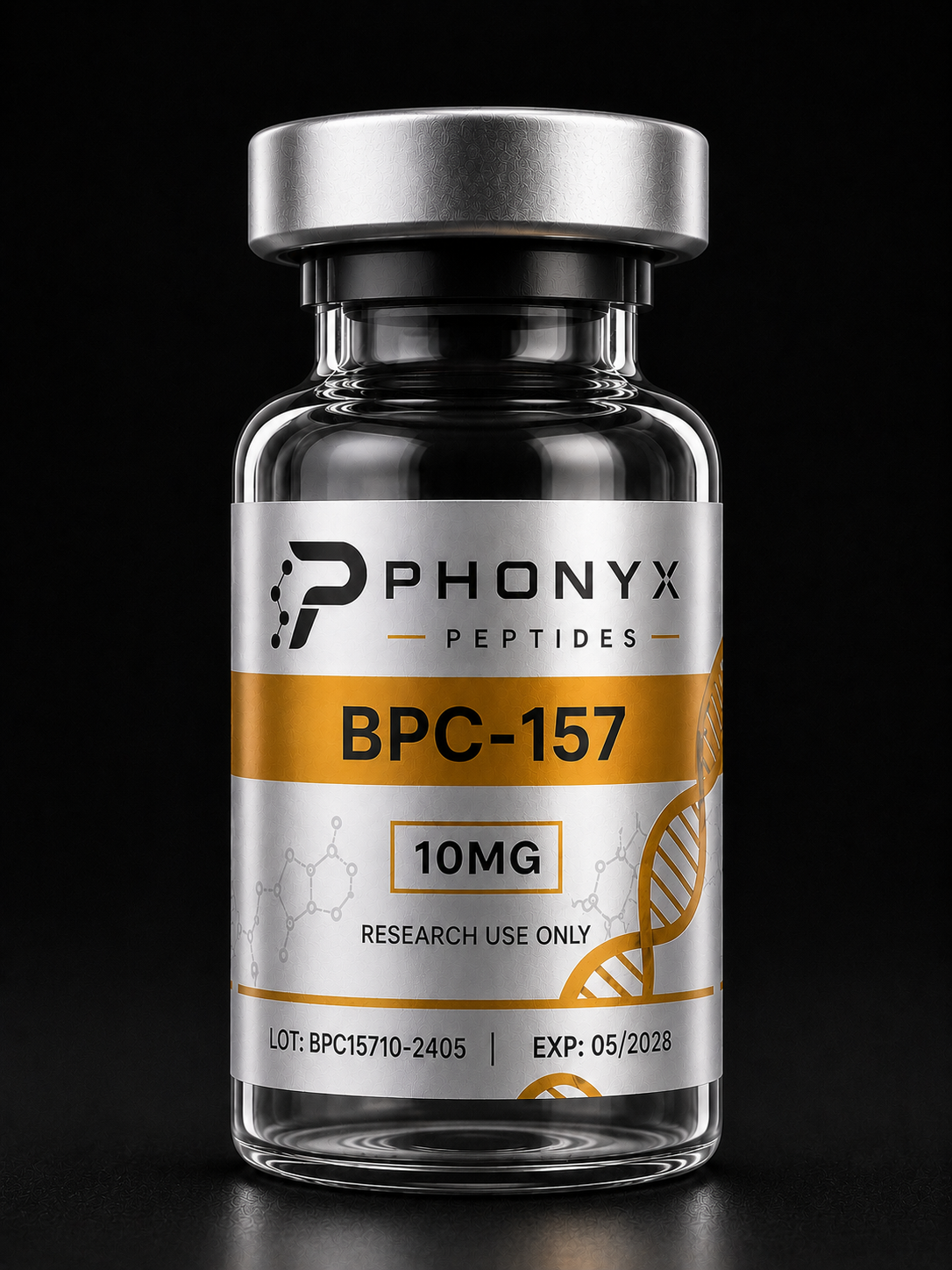
Phonyx Peptides BPC-157 10 mg – Research Peptide Vial
Phonyx Peptides BPC-157 10 mg Research Peptide Phonyx Peptides BPC-157 10 mg is a single-compound research peptide vial with a stated total of 10 mg of BPC-157. BPC-157 (Body Protection Compound-157) is a synthetic 15-amino-acid pentadecapeptide taken from a protective protein sequence found in gastric juice. The Phonyx format is lyophilized powder, purity ≥99%, labeled for Research Use Only. The 10 mg marking is total material in the vial. It is not a dose. A 5 mg format, where sold, differs only in the amount of lyophilized peptide, not in purity or composition. The format on this page is 10 mg. What is BPC-157? BPC-157 is catalogued as a regenerative research peptide, not an incretin or a metabolic peptide. Preclinical work looks at cytoprotection, angiogenesis, nitric-oxide signalling, fibroblast migration, collagen organization, and protection of gastric and vascular tissue. The sequence discussed for this pentadecapeptide is GEPPPGKPADDAGLV. It is not an approved medicine. Human efficacy and safety are unestablished. What research shows Musculoskeletal models. Rat and cell studies describe faster closure of transected Achilles tendon, dose-dependent migration of tendon fibroblasts, better cell survival under stress, and repair signals in injured muscle and ligament. Those are animal and in vitro findings. Gastrointestinal models. Much of the early evidence is gastric and intestinal protection, including ulcer models and NSAID-associated injury. Nitric-oxide signalling is the pathway most often proposed. Vascular models. Studies link BPC-157 to VEGF expression, VEGFR2-related vessel formation, endothelial protection and blood supply in slowly healing tissue. Neural models. Spinal-cord, peripheral-nerve and brain-injury work exists in animals only. It is not an established human outcome. Human data. Published human evidence is limited to small pilot or observational reports. A registered phase II hamstring-strain trial has been reported. Peer-reviewed efficacy results from that trial are not available. There is no established human dose. Experimental amounts in the literature are mostly animal doses scaled to body weight, and they do not convert into a protocol for this vial. Published results apply to the exact material and quality system used in each study. They do not automatically validate any commercial research vial. Specifications Brand: Phonyx Peptides Product: BPC-157 Synonym: Body Protection Compound-157 Class: Synthetic 15-amino-acid pentadecapeptide Sequence: GEPPPGKPADDAGLV Total labeled content: 10 mg Form: Lyophilized powder Purity: ≥99% Category: Regenerative research peptide Storage before reconstitution: Protected from light and moisture; refrigerate or freeze for long-term storage After laboratory reconstitution: 2–8 °C; stability depends on solvent and conditions Designation: Research Use Only Storage and handling Keep the dry vial protected from light and moisture. Use refrigerated or frozen storage when the laboratory keeps it long term. If a solution is prepared for assay work, add solvent slowly along the vial wall, do not shake hard, store at 2–8 °C and avoid repeated freeze-thaw. Follow the lot COA and the laboratory SOP. Do not remove the label. Interest in studying BPC-157 alongside TB-500 or GHK-Cu comes from different repair-related pathways. That is a research question, not a combination protocol. Research Use Only. Not for human consumption, self-administration, diagnosis, treatment, cure or prevention of any disease.
How AI sees this product
The more complete this product's details, the more confidently AI assistants can understand and recommend it.