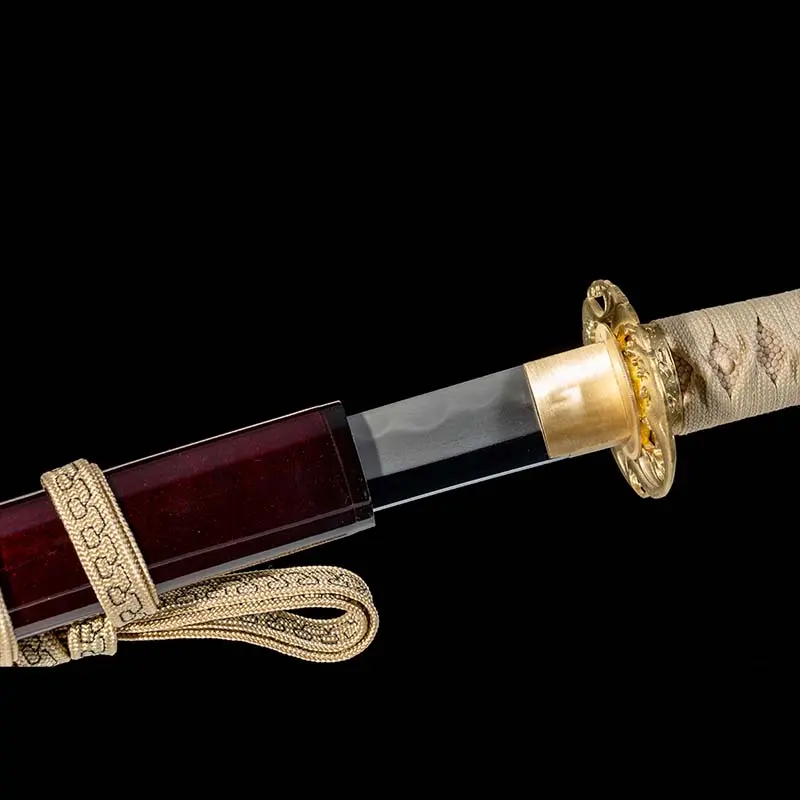
Hand Forged 1095 Katana – Natural Hamon, Wave Tsuba
A Hand-Forged 1095 Katana Built for Real Cutting 1095 steel. Full tang. Clay tempered. Real hamon. Pure copper fittings. Gold wave tsuba. Large-grain rayskin. Burgundy saya. That is the whole katana, no filler. I have handled a lot of 1095 katana, and this hand forged 1095 katana is the one I point to when someone wants a cutter that also looks expensive. The gold wave fittings do the talking. The 1095 blade does the cutting. Let me break it down. Specifications Blade steel: 1095 high-carbon steel (~0.95% carbon), hand forged Temper: clay tempered, genuine natural hamon Edge hardness: HRC 55–60 Tang: full tang — one continuous piece, tip to pommel Fittings: Premium Quality Brass; fully gilded gold wave tsuba (open-work) with matching gold kashira Habaki: Brass, with a refined mirror polish finish, plain and solid Tsuka: large-grain rayskin with cream ito diamond wrap Saya: deep burgundy lacquer, hand-applied; gold sageo, gold kojiri cap Blade length (nagasa): 28.7′ Tsuka length: 10.24′ Options: sharpened or unsharpened; cotton sword bag; engraving on request How This Katana Is Made From the begining, the blade is forged by hand from 1095 steel. Clay goes on the spine. The quench hardens the edge to 55–60 HRC while the spine stays springy. The hamon that appears is natural — no acid, no paint. I like natural hamon because every one is different. You cannot fake that look twice. Not sure about 1095? Read our katana steel carbon content guide first. The fittings is pure copper, not alloy. The tsuba is fully gilded with a rolling wave relief, open-worked so light plays through it. The kashira matches — one designed set, not random parts. The wave tsuba is very beautiful, I like it very much. The tsuka is cream ito in a tight diamond wrap. Pale rayskin shows through the diamonds. Large grain, so the nodes grip better. You feel it the first time you hold it. The habaki is copper with a gold finish, plain and solid. The saya is deep burgundy lacquer, applied by hand, with a glossy finish. The gold sageo is tied in a decorative knot. The kojiri cap is gold with wave carving to match the tsuba. The tone shifts a little between pieces. Yours will be in the same burgundy family, but the exact depth is yours alone. Who Should Buy It Buy this if you want a real cutter with presence. I recomend this hand forged 1095 katana for beginners moving up from 1060, and for collectors who want gold fittings without the custom price. It is sharp blade, handle with care. Skip it if you only want wall art — a cheaper blade does that job. Care CAUTION: Do not touch the blade with bare hands. Sweat causes rust fast on 1095. Apply oil to the blade monthly. The maintainance is simple: oil, wipe, store dry. Store the katana in the saya, in a dry place. After cutting, clean the blade first, then oil it. Do not sheath a dirty blade. FAQ Q: Is the hamon real or etched? A: Real. Clay tempering quench. The wavy line is the physical result of the quench. We never etch or paint a hamon on a blade we call genuine. Q: What does full tang mean for me? A: One piece of steel, tip to pommel. It handles impact better and will not loosen like half-tang blades. For tameshigiri, full tang is the standard. Q: Can I get it unsharpened or engraved? A: Yes. Choose sharpened or unsharpened at checkout. If you want sharp, we can make it sharper for you — just tell us. Engraving available on request. This hand forged 1095 katana gives you a real hamon, real copper, and gold waves at a working cutter’s price. If that sounds like your katana, it probably is. Questions? Email us. We actually reply.
Specifications
- HAND SHARPENING
- Hand Sharpened, Unsharpened
How AI sees this product
The more complete this product's details, the more confidently AI assistants can understand and recommend it.