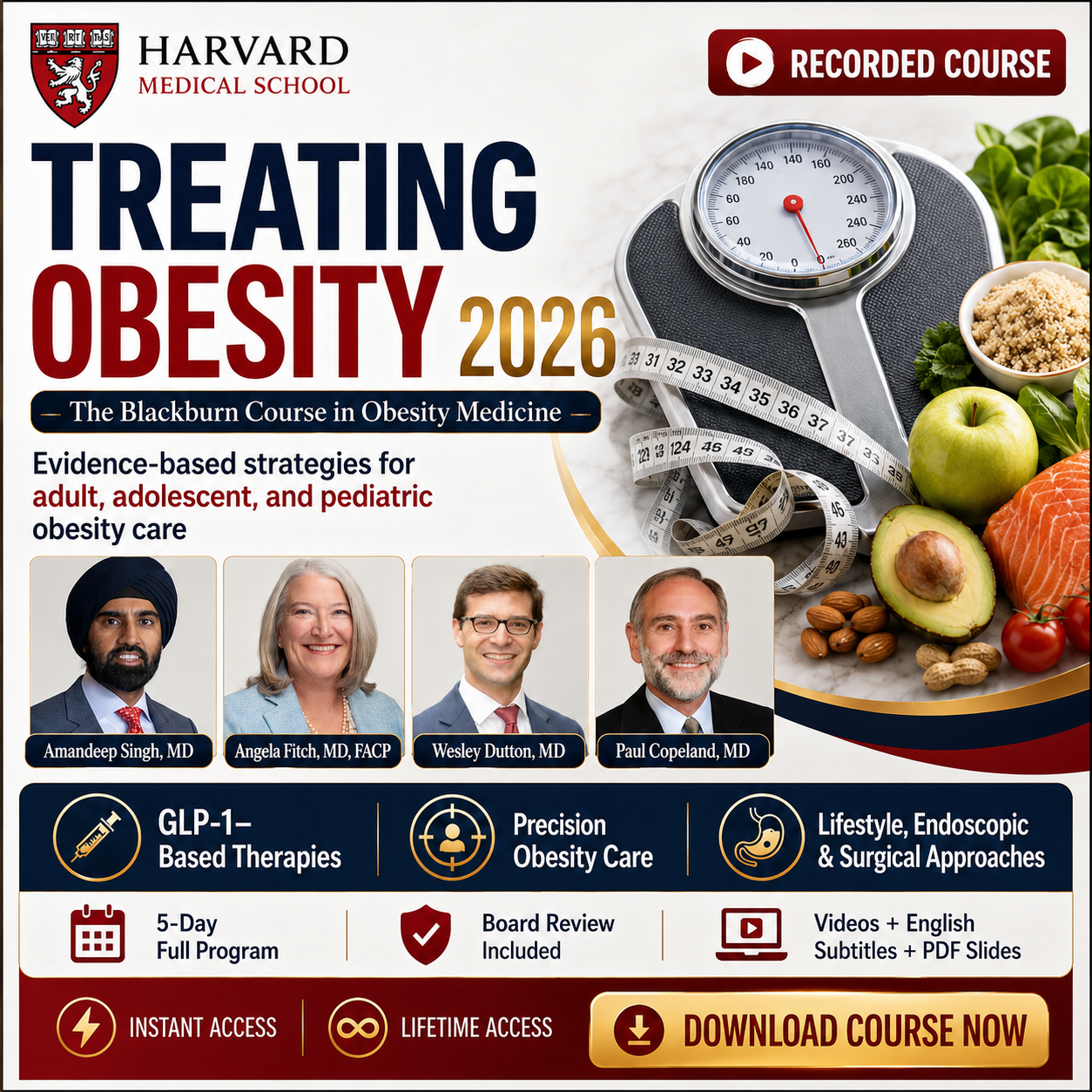
Harvard Treating Obesity 2026
.obesity-2026-description { –harvard-red: #b0002a; –harvard-dark: #98001f; –harvard-bright: #ed2436; –soft-pink: #fff4f6; –card-pink: #fff7f8; –border: #efd1d7; –text: #242424; –muted: #5f5f63; –white: #ffffff; max-width: 1100px; margin: 0 auto; color: var(–text); font-family: Arial, Helvetica, sans-serif; font-size: 16px; line-height: 1.65; } .obesity-2026-description, .obesity-2026-description * { box-sizing: border-box; } .obesity-2026-description h1, .obesity-2026-description h2, .obesity-2026-description h3, .obesity-2026-description h4, .obesity-2026-description p { margin-top: 0; } .obesity-2026-description .course-hero { overflow: hidden; padding: 35px 48px 45px; border-radius: 19px; background: linear-gradient( 135deg, #a00021 0%, #bd102d 48%, #ed2638 100% ); color: var(–white); box-shadow: 0 18px 38px rgba(176, 0, 42, 0.18); } .obesity-2026-description .course-edition { display: inline-block; margin-bottom: 19px; padding: 6px 15px; border: 1px solid rgba(255, 255, 255, 0.65); border-radius: 30px; color: var(–white); font-size: 12px; font-weight: 700; letter-spacing: 0.6px; text-transform: uppercase; } .obesity-2026-description .course-hero h1 { margin-bottom: 20px; color: var(–white); font-size: 34px; font-weight: 800; line-height: 1.25; } .obesity-2026-description .course-hero > p { margin-bottom: 28px; color: var(–white); font-size: 17px; line-height: 1.7; } .obesity-2026-description .hero-stats { display: grid; grid-template-columns: repeat(4, 1fr); gap: 18px; margin-bottom: 25px; } .obesity-2026-description .hero-stat { min-height: 100px; padding: 20px 15px; border-radius: 13px; background: rgba(255, 255, 255, 0.14); text-align: center; } .obesity-2026-description .hero-stat strong { display: block; margin-bottom: 3px; color: var(–white); font-size: 26px; font-weight: 800; line-height: 1.2; } .obesity-2026-description .hero-stat span { display: block; color: var(–white); font-size: 17px; } .obesity-2026-description .hero-topics { display: grid; grid-template-columns: repeat(4, 1fr); gap: 18px; } .obesity-2026-description .hero-topic { display: flex; min-height: 96px; align-items: center; justify-content: center; padding: 17px; border-radius: 12px; background: var(–white); color: var(–harvard-red); text-align: center; font-size: 16px; font-weight: 800; line-height: 1.45; } .obesity-2026-description .course-details { margin: 25px 0 35px; padding: 20px 25px; border-left: 5px solid var(–harvard-red); border-radius: 0 12px 12px 0; background: var(–soft-pink); } .obesity-2026-description .course-details strong { color: var(–text); } .obesity-2026-description .description-section { margin: 37px 0; } .obesity-2026-description .section-title { margin-bottom: 20px; padding-bottom: 8px; border-bottom: 1px solid #dc7889; color: var(–harvard-red); font-size: 34px; font-weight: 800; line-height: 1.25; } .obesity-2026-description .description-section p { margin-bottom: 19px; } .obesity-2026-description .highlight-box, .obesity-2026-description .curriculum-box { overflow: hidden; margin-bottom: 18px; border: 1px solid var(–border); border-radius: 12px; background: var(–white); } .obesity-2026-description .box-heading { padding: 10px 16px; background: var(–harvard-red); color: var(–white); font-size: 15px; font-weight: 800; } .obesity-2026-description .box-content { padding: 17px 21px; } .obesity-2026-description .box-content ul { margin: 0; padding-left: 20px; } .obesity-2026-description .box-content li { margin-bottom: 5px; } .obesity-2026-description .box-content li:last-child { margin-bottom: 0; } .obesity-2026-description .learning-grid { display: grid; grid-template-columns: repeat(4, 1fr); gap: 17px; } .obesity-2026-description .learning-card { padding: 20px 18px; border: 1px solid var(–border); border-radius: 12px; background: var(–card-pink); } .obesity-2026-description .learning-card h3 { margin-bottom: 8px; color: var(–harvard-red); font-size: 16px; font-weight: 800; line-height: 1.4; } .obesity-2026-description .learning-card p { margin-bottom: 0; } .obesity-2026-description .curriculum-box .box-content { padding-top: 15px; padding-bottom: 17px; } .obesity-2026-description .curriculum-box h4 { margin: 17px 0 8px; color: var(–harvard-dark); font-size: 16px; font-weight: 800; } .obesity-2026-description .curriculum-box h4:first-child { margin-top: 0; } .obesity-2026-description .audience-text { margin-bottom: 0; } .obesity-2026-description .delivery-grid { display: grid; grid-template-columns: repeat(4, 1fr); gap: 17px; } .obesity-2026-description .delivery-card { min-height: 165px; padding: 20px 18px; border: 1px solid var(–border); border-radius: 12px; background: var(–card-pink); } .obesity-2026-description .delivery-card h3 { margin-bottom: 8px; color: var(–harvard-red); font-size: 16px; font-weight: 800; } .obesity-2026-description .delivery-card p { margin-bottom: 0; } .obesity-2026-description .reviews-grid { display: grid; grid-template-columns: repeat(3, 1fr); gap: 17px; } .obesity-2026-description .review-card { min-height: 225px; padding: 20px; border: 1px solid var(–border); border-radius: 10px; background: var(–white); } .obesity-2026-description .review-stars { margin-bottom: 10px; color: #ffb000; font-size: 17px; letter-spacing: 1px; } .obesity-2026-description .review-card strong { display: block; margin-bottom: 6px; color: var(–text); } .obesity-2026-description .review-card p { margin-bottom: 0; } .obesity-2026-description .faq-list details { margin-bottom: 11px; overflow: hidden; border: 1px solid var(–border); border-radius: 10px; background: var(–white); } .obesity-2026-description .faq-list summary { position: relative; padding: 14px 18px 14px 37px; color: var(–harvard-red); cursor: pointer; list-style: none; font-weight: 800; } .obesity-2026-description .faq-list summary::-webkit-details-marker { display: none; } .obesity-2026-description .faq-list summary::before { content: “▶”; position: absolute; top: 15px; left: 16px; color: var(–harvard-red); font-size: 10px; } .obesity-2026-description .faq-list details[open] summary::before { content: “▼”; } .obesity-2026-description .faq-answer { padding: 0 18px 16px 37px; } .obesity-2026-description .download-course-button { display: block; width: 100%; margin-top: 28px; padding: 20px; border-radius: 10px; background: #c4002f; box-shadow: 0 13px 26px rgba(196, 0, 47, 0.2); color: var(–white); text-align: center; font-size: 20px; font-weight: 800; letter-spacing: 0.3px; } @media (max-width: 900px) { .obesity-2026-description .hero-stats, .obesity-2026-description .hero-topics, .obesity-2026-description .learning-grid, .obesity-2026-description .delivery-grid { grid-template-columns: repeat(2, 1fr); } .obesity-2026-description .reviews-grid { grid-template-columns: 1fr; } } @media (max-width: 600px) { .obesity-2026-description .course-hero { padding: 30px 22px; } .obesity-2026-description .course-hero h1 { font-size: 28px; } .obesity-2026-description .section-title { font-size: 28px; } .obesity-2026-description .hero-stats, .obesity-2026-description .hero-topics, .obesity-2026-description .learning-grid, .obesity-2026-description .delivery-grid { grid-template-columns: 1fr; } } HARVARD • 2026 EDITION Treating Obesity 2026: The Blackburn Course in Obesity Medicine A definitive obesity medicine update designed for clinicians who want practical, evidence-based guidance on the evaluation, prevention, and treatment of obesity in adult, adolescent, and pediatric patients. 5 Days Full Program Board Review Included Harvard Faculty 2026 Edition GLP-1–Based Therapies Precision Obesity Care Lifestyle & Behavioral Treatment Endoscopic & Surgical Care Course Details: Treating Obesity 2026 is a premium recorded course bundle covering comprehensive obesity assessment, lifestyle intervention, pharmacotherapy, GLP-1–based treatment, precision care, pediatric obesity, bariatric procedures, and obesity-related complications. About This Course This course provides a broad and practical review of the most important advances in modern obesity medicine. It focuses on applying current evidence-based approaches to real-world patient care, helping clinicians evaluate obesity, individualize treatment, and manage associated medical complications with greater structure and confidence. Major themes include comprehensive patient assessment, obesity staging, nutrition, exercise, behavioral intervention, anti-obesity pharmacotherapy, GLP-1–based therapies, precision medicine, pediatric care, endoscopic treatment, bariatric surgery, virtual care models, weight stigma, and cardiometabolic disease. Why Choose This Course Key Highlights Complete Obesity Medicine Board Review and four-day Treating Obesity program Current updates on newer GLP-1–based therapies and combination treatment Comprehensive evaluation, staging, and individualized treatment of obesity Adult, adolescent, and pediatric obesity management Medical, nutritional, behavioral, endoscopic, and surgical approaches Recorded videos, English subtitles, and PDF presentation slides Core Learning Areas Clinical Assessment & Pharmacotherapy Obesity staging, body composition, standards of care, anti-obesity medications, GLP-1 therapies, combination treatment, and medication dosing. Nutrition, Exercise & Precision Care Dietary strategies, physical activity, time-restricted eating, behavioral care, genetics, circadian health, and personalized metabolic treatment. Pediatric, Endoscopic & Surgical Care Pediatric assessment, anti-obesity medications, bariatric endoscopy, gastric balloons, sleeve gastroplasty, and bariatric surgery. Comorbidities, Equity & Care Models Cardiovascular disease, diabetes, cancer, sleep apnea, liver disease, mental health, disparities, stigma, virtual care, and group visits. Complete Curriculum Obesity Medicine Board Review — Sunday, June 7, 2026 Full-Day Precourse: 9:00 AM–7:20 PM Pathophysiology of obesity Obesity comorbidities Pediatric patient management Genetic and syndromic obesity Nutrition and exercise assessment and intervention Intensive lifestyle and behavioral therapy Anti-obesity pharmacotherapy Bariatric surgery Treating Obesity 2026 — Day 1: Monday, June 8, 2026 Welcome & Introduction Welcome and Introduction — Course Directors 2026 Blackburn Lecture State of Obesity in 2026 — Dr. Robert Kushner Roundtable Discussion with Dr. Robert Kushner & Dr. Steven Heymsfield Approach to Treatment Clinical Approach to the Patient with Obesity — Dr. Ethan Lazarus Standards of Care for Obesity Treatment — Dr. Kimberly Gudzune Body Composition — Dr. Grant Tinsley Obesity and Mental Health: Shared Complexity, Mechanisms and Responsibilities — Dr. Robin Pashby Panel Discussion: Approach to Treatment Pharmacotherapy Obesity Pharmacotherapy — Dr. Leslie Golden Combination Treatment for Obesity Management — Dr. Sreevidya Bodepudi Pharmacodynamics and Medication Dosing in the Patient with Obesity — Dr. Christina Chow A Patient’s Perspective — Dr. Angela Fitch Panel Discussion: Pharmacotherapy Self-Paced Study Sessions Staging, Assessment and Treatment of Obesity — Dr. Daniel Bessesen Patient-Centric Treatment of Obesity — Dr. Sean Wharton Complex Genetic Obesity Syndromes — Dr. Sadaf Farooqi Patient Case Presentations Highlighting Delivery of Care — Parts 1–3 Beyond BMI: Obesity Staging and Treatment Guidelines — Dr. Timothy Garvey Treating Obesity 2026 — Day 2: Tuesday, June 9, 2026 Exercise & Dietary Considerations Key Exercise Recommendations for Weight Loss and Maintenance — Dr. John Jakicic Updated Dietary Guidelines for Americans — Dr. Christopher Gardner Time-Restricted Eating — Dr. Krista Varady Dietary Strategies for Weight Loss — Dr. Chika Anekwe Culinary Medicine Programs — Dr. Michelle Hauser Panel Discussion: Dietary Considerations Individualization of Care The New Fundamentals of Obesity Care — Dr. Carolynn Francavilla-Brown Genetics and the Future of Obesity Treatment — Dr. Jesse Richards Lipodystrophy — Dr. Lindsay Fourman Panel Discussion: Individualization of Care Precision Care Precision Medical Treatment of Obesity — Dr. Andres Acosta Precision Lifestyle Treatments for Obesity — Dr. Andrew Chan The Future State of Obesity Care — Dr. Deborah Horn Patient Case Presentations Highlighting Precision Delivery of Care — Dr. Florence Porterfield Panel Discussion: Precision Care Self-Paced Study Sessions Circadian Influences and Lifestyle Interventions — Dr. Frank Scheer A Dietitian’s Approach to a Patient with Obesity — Abeer Bader, RD Tailoring Obesity Care Based on Genetic Differences — Dr. Ruth Loos Research into Tailoring Obesity Care — Dr. Elizabeth Speliotes Using Technology to Deliver Personalized Metabolic Care — Dr. Eran Segal Treating Obesity 2026 — Day 3: Wednesday, June 10, 2026 Models of Delivering Care Cooperative Integrated and Virtual Care Models — Dr. Florencia Halperin Delivering Effective Obesity Care in Private Practice — Dr. Shirly “Shalu” Ramchandani Integrating Primary Care and Obesity Medicine in an Academic Medical Center — Dr. Leigh Perreault Optimizing Outcomes: Success of a Pharmacist-Driven GLP-1 Program — Dr. Amanda Powell Group Visit Models — Dr. Jacob Mirsky Panel Discussion: Models of Delivering Care Pediatrics Assessment of the Pediatric Patient with Obesity — Dr. Marisa Censani Anti-Obesity Medications in Pediatric Patients — Dr. Vibha Singhal Bariatric Endoscopy and Surgery in Pediatric Patients — Dr. Cornelia Griggs Panel Discussion: Pediatric Obesity Endoscopic & Surgical Approaches Endoscopic Sleeve Gastroplasty, POSE & TORe — Dr. Barham Abu Dayyeh Gastric Balloons and Duodenal Resurfacing — Dr. Amandeep Singh Update on Bariatric Surgery — Dr. Richard Peterson Nonsurgical Management After Bariatric Surgery — Dr. Angela Fitch Panel Discussion: Surgical Approaches Self-Paced Study Sessions Providing Virtual Obesity Care Optimizing Obesity Care in Private Practice Advancing Obesity Care in Academic Medicine Multidisciplinary Weight Center Case Studies Implementation Science in Cardiometabolic Health Treating Obesity 2026 — Day 4: Thursday, June 11, 2026 Disparities & Stigma in Obesity Care Addressing Healthcare Disparities in Obesity Treatment — Dr. Jamy Ard Equal Access to Care: A North Carolina Story — Dr. Sarah Ro Stigma and Bias in Treating Obesity — Joe Nadglowski Panel Discussion Considerations in the Patient with Obesity The Unbearable Lightness of Weight and Age — Dr. Beverly Tchang Metabolic Disease and Mental Health — Dr. Christopher Palmer Obesity Prior to Procedures & GLP-1 Considerations — Dr. Rodney Voisine Panel Discussion Diseases in the Patient with Obesity Obesity and Cardiovascular Disease — Dr. Harold Bays Sleep Health and Sleep Apnea — Dr. Jeremy McConnell Obesity and Cancer — Dr. Justin Brown MASLD/MASH Updates and Treatment Landscape in 2026 — Dr. Nadege Gunn Obesity and Diabetes — Dr. Paul Copeland Panel Discussion Self-Paced Study Sessions Caring for All Patients — Dr. Adjoa Anyane-Yeboa Equity in Obesity Care — Dr. Wesley Dutton Diagnosis and Staging of MAFLD/MASH — Dr. Kathleen Corey Who Should Take This Course This course is designed for obesity medicine physicians, endocrinologists, internal medicine physicians, family medicine physicians, primary care clinicians, pediatricians, gastroenterologists, bariatric specialists, surgeons, nurse practitioners, physician assistants, dietitians, psychologists, residents, fellows, and other healthcare professionals involved in obesity and metabolic care. Delivery & Access Recorded Course Learn at your own pace with complete recorded course sessions. Complete Bundle Includes the Board Review and all four days of Treating Obesity 2026. Videos, Subtitles & Slides Includes the available videos, English subtitles, and PDF presentation slides. Support contact@medicourses.online Reviews ★★★★★ Obesity Medicine Physician Excellent breadth of content. The course organizes modern obesity assessment, pharmacotherapy, lifestyle care, and procedural options into a very practical format. ★★★★★ Endocrinology Physician Very comprehensive and relevant. I especially valued the sessions on GLP-1–based treatment, combination therapy, precision care, and metabolic complications. ★★★★★ Primary Care Physician A valuable update for busy clinicians. The case-based approach and broad coverage of adult and pediatric obesity make the material easier to apply in practice. FAQ Who is this course best suited for? The course is suitable for physicians and healthcare professionals involved in obesity medicine, endocrinology, primary care, pediatrics, nutrition, metabolic health, behavioral care, and bariatric treatment. What topics are included? Topics include obesity assessment and staging, GLP-1–based therapies, pharmacotherapy, nutrition, exercise, behavioral intervention, precision care, pediatric obesity, endoscopic procedures, bariatric surgery, obesity-related diseases, disparities, stigma, and models of care. Is the course practical for daily practice? Yes. The program emphasizes practical clinical strategies, patient cases, treatment selection, counseling, multidisciplinary care, and approaches that can be applied in real-world clinical settings. Who can I contact for support? For assistance, please contact contact@medicourses.online. DOWNLOAD COURSE
AI Readiness
Good foundation, but some important product data is still missing.