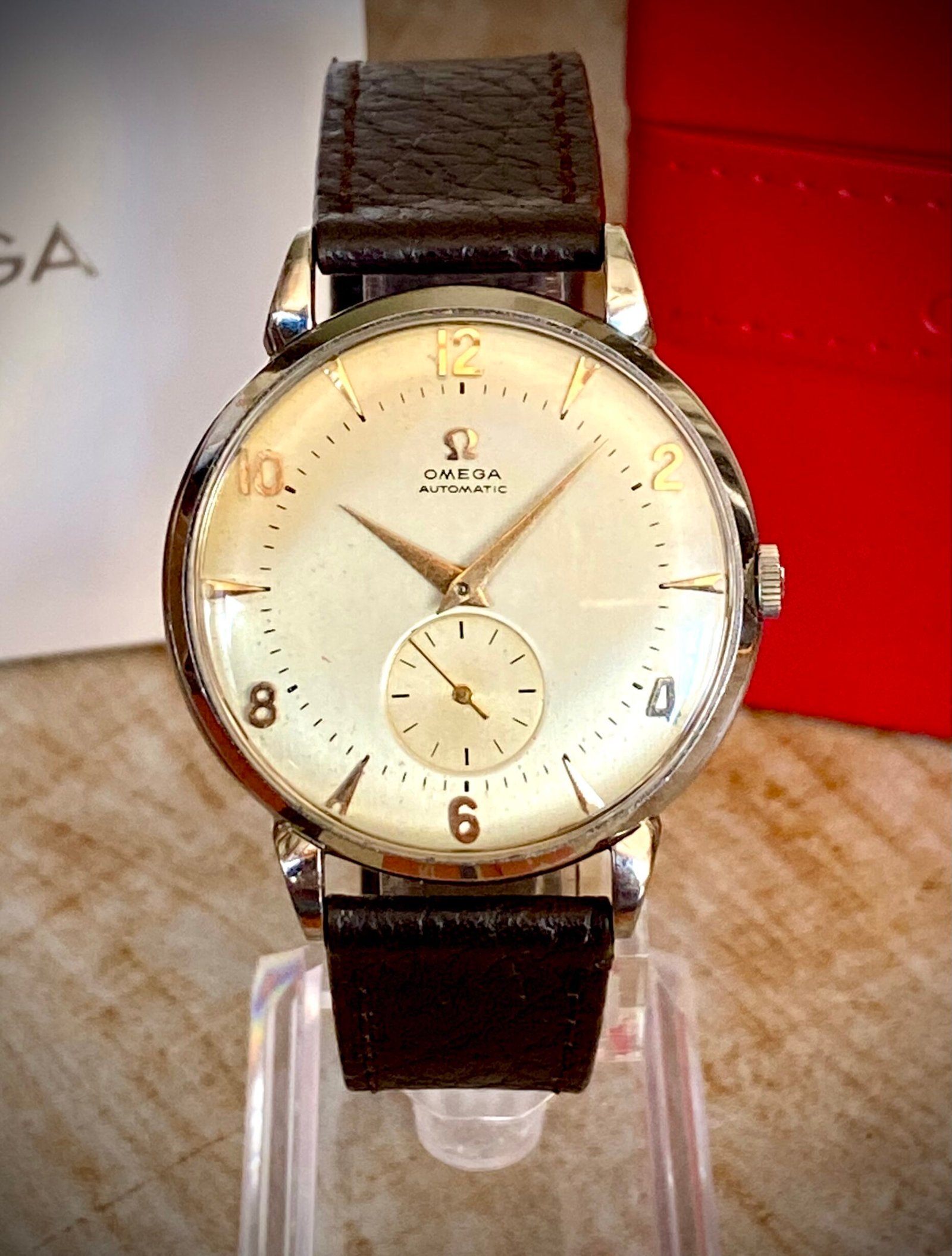
OMEGA «JUMBO» AUTOMATIC «BUMPER» WATCH, 1954
History of Omega Watches Omega’s history is a fascinating tale of constant innovation, limitless precision, and a unique connection with humanity’s most transcendent moments. From its humble beginnings as a family workshop in Switzerland to becoming a global giant in watchmaking, Omega has left an indelible mark on history, whether on the wrist of astronauts on the Moon, on the secret agents on the big screen, or on the tracks of the Olympic Games. Origins and Foundation Omega’s story begins in 1848, when a 23-year-old watchmaker named Louis Brandt opened a pocket watch assembly workshop in La Chaux-de-Fonds, Switzerland. In its early days, Brandt purchased components from local craftsmen and assembled them with meticulous precision. After his death in 1879, his sons Louis-Paul and César took over the business. Tired of the inconsistent quality of suppliers, they decided to take a bold step: in 1880, they moved the company to Biel/Bienne and began manufacturing their own movements, thus controlling the entire production process. The Birth of the Name Omega A major turning point came in 1894 with the creation of the revolutionary 19-ligne caliber. This movement was not only extremely precise but introduced a system of interchangeable parts that allowed for easy repair by any watchmaker in the world. The success was overwhelming, prompting the Brandt brothers to name their creation after the last letter of the Greek alphabet: Omega, symbolizing perfection, «the ultimate achievement.» In 1903, the company was officially renamed Omega Watch Co., adopting the name of its flagship product. Consolidation and Challenges of the 20th Century In the early decades of the 20th century, Omega solidified its reputation for precision. In 1917, the British Royal Flying Corps designated it as an official supplier, and during the Second World War, Omega became the main supplier of watches for the Allied forces, demonstrating its reliability in extreme conditions. Post-war economic hardships led Omega to merge with Tissot, forming the SSIH group (Société Suisse pour l’Industrie Horlogère) in 1930. In 1932, the brand reached another milestone by being named the official timekeeper of the Los Angeles Olympic Games, a role it continues to hold to this day, forever linking it with the precise measurement of time in elite sports. … (El resto del texto se mantuvo igual)
Specifications
- Brand
- Omega
- Model
- Pre Genéve
- Gender
- Man
AI Readiness
Good foundation, but some important product data is still missing.