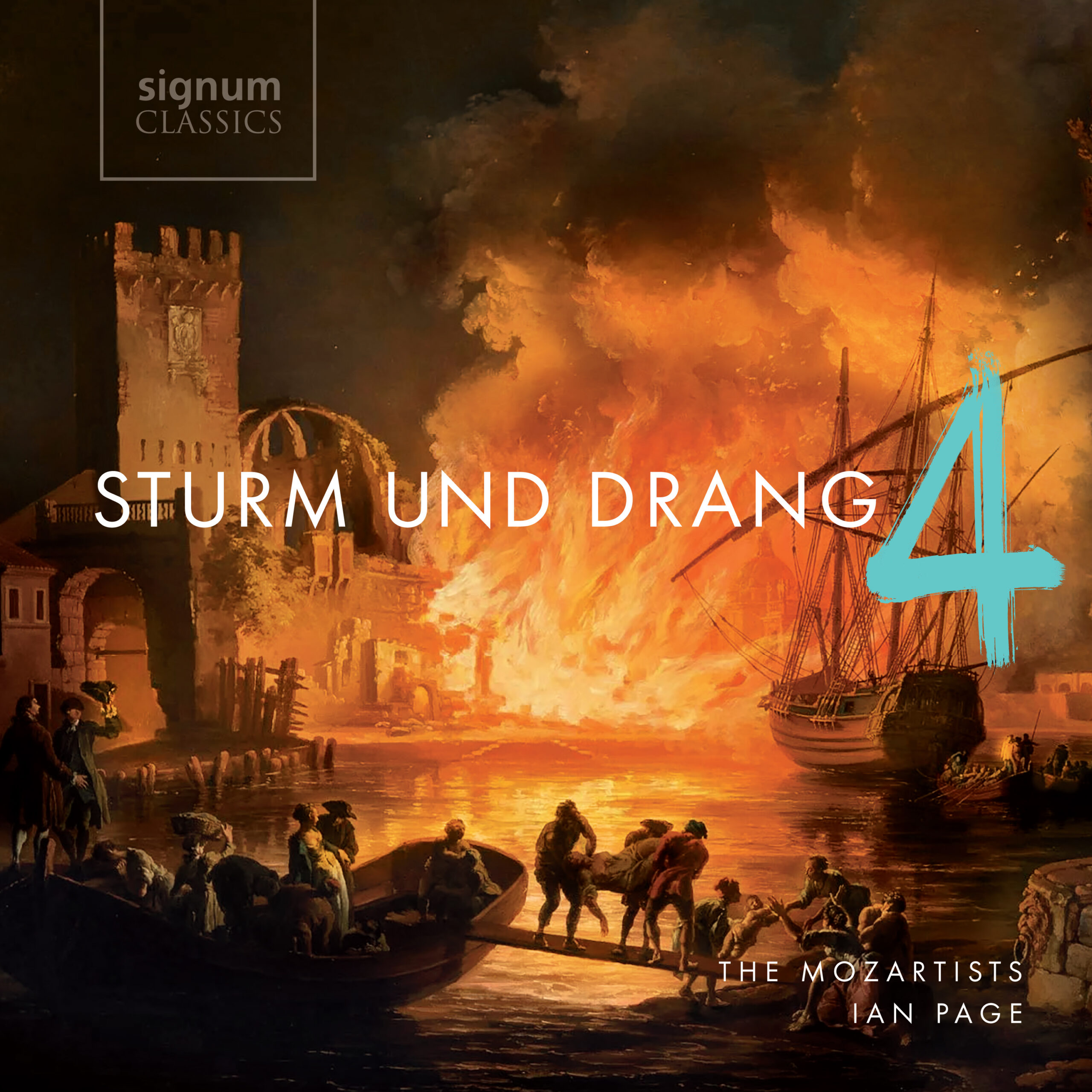
‘Sturm und Drang’, Volume 4
[et_pb_section fb_built=”1″ _builder_version=”4.16″ custom_padding=”0px||||false|false” global_colors_info=”{}”][et_pb_row _builder_version=”4.16″ background_size=”initial” background_position=”top_left” background_repeat=”repeat” width=”100%” custom_padding=”0px||0px||false|false” global_colors_info=”{}”][et_pb_column type=”4_4″ _builder_version=”4.16″ custom_padding=”|||” global_colors_info=”{}” custom_padding__hover=”|||”][et_pb_wc_breadcrumb _builder_version=”4.27.4″ global_colors_info=”{}”][/et_pb_wc_breadcrumb][et_pb_wc_cart_notice _builder_version=”4.27.4″ global_colors_info=”{}”][/et_pb_wc_cart_notice][/et_pb_column][/et_pb_row][et_pb_row column_structure=”1_2,1_2″ _builder_version=”4.16″ background_size=”initial” background_position=”top_left” background_repeat=”repeat” width=”100%” custom_padding=”0px||||false|false” global_colors_info=”{}”][et_pb_column type=”1_2″ _builder_version=”4.16″ custom_padding=”|||” global_colors_info=”{}” custom_padding__hover=”|||”][et_pb_wc_images _builder_version=”4.27.4″ border_radii_image=”off||||” global_colors_info=”{}”][/et_pb_wc_images][/et_pb_column][et_pb_column type=”1_2″ _builder_version=”4.16″ custom_padding=”|||” global_colors_info=”{}” custom_padding__hover=”|||”][et_pb_wc_title _builder_version=”4.27.4″ global_colors_info=”{}”][/et_pb_wc_title][et_pb_wc_rating _builder_version=”4.27.4″ global_colors_info=”{}”][/et_pb_wc_rating][et_pb_wc_price _builder_version=”4.27.4″ global_colors_info=”{}”][/et_pb_wc_price][et_pb_wc_meta _builder_version=”4.27.4″ global_colors_info=”{}”][/et_pb_wc_meta][et_pb_button button_url=”https://link.mozartists.com/GluckArias” button_text=”Pre-order” _builder_version=”4.27.7″ _module_preset=”default” global_colors_info=”{}”][/et_pb_button][/et_pb_column][/et_pb_row][et_pb_row _builder_version=”4.16″ background_size=”initial” background_position=”top_left” background_repeat=”repeat” width=”100%” global_colors_info=”{}”][et_pb_column type=”4_4″ _builder_version=”4.16″ custom_padding=”|||” global_colors_info=”{}” custom_padding__hover=”|||”][et_pb_tabs _builder_version=”4.27.7″ _module_preset=”default” global_colors_info=”{}”][et_pb_tab title=”Intro” _builder_version=”4.27.7″ _module_preset=”default” global_colors_info=”{}”] “…a series that is special not just for the thought and scholarship that goes into it, but Page’s direction of his fine players. It is throughout beautifully balanced and paced, while at the same time musically highly insightful.” EARLY MUSIC REVIEW This recording is the fourth in a projected seven-volume series exploring the so-called ‘Sturm und Drang’ movement that swept through music and other art forms between the early 1760s and the late 1780s. In its strictest sense this was an exclusively literary movement which developed in Germany during the 1770s, and which owes its name to the title of a play written in 1776 by Maximilian Klinger. Its general objectives were to frighten and perturb through the use of a wildly subjective and emotional means of expression, and, taking as its model the recently revived and revered plays of Shakespeare, the movement sought to evoke ground-breaking extremes of passion and sentimentality. A leading figure was the young Goethe, whose Sorrows of the Young Werther (1774) anticipated the sombre world-weariness of the next century’s young Romantics, and the movement is generally considered to have reached its peak with Schiller’s play Die Räuber (1780-81). Not surprisingly, the ‘Sturm und Drang’ movement was mirrored in other art forms; the evocation of fear and terror was reflected in the fashion for storms and shipwrecks in paintings of the period by such artists as Joseph Vernet and Philip James de Loutherbourg, while in music there suddenly, and often quite independently, emerged a profusion of intensely dramatic and turbulent minor-key works. It is interesting to observe, though, that the most concentrated period of musical ‘Sturm und Drang’ actually predated the literary movement, suggesting less a conscious and deliberate ‘movement’ than a latent emotional mood. Indeed, it was perhaps inevitable and natural that there should at some point be a reaction to the superficial charm and gentility of the rococo style of the mid-eighteenth century. This fourth volume in The Mozartists’ ‘Sturm und Drang’ series features feverishly intense symphonies by Kraus and Haydn, opera arias by Mozart and Traetta, and the climactic scene from Jiří Benda’s melodrama Medea, which Mozart excitedly hailed as the future of opera. [/et_pb_tab][et_pb_tab title=”Track Listing” _builder_version=”4.27.7″ _module_preset=”default” custom_css_free_form=”.boxed-number {|| display: inline-flex;|| width: 24px;|| height: 24px;|| border: 1px solid #000;|| align-items: center;|| justify-content: center;|| font-weight: bold;|| font-size: 14px;|| line-height: 1;|| box-sizing: border-box;||}” global_colors_info=”{}”] KRAUS: Symphony in C minor, VB 142 1 I. Larghetto – Allegro 9’47 2 II. Andante 5’34 3 III. Finale 6’21 4 TRAETTA: “Ombra cara, amorosa… Io resto sempre a piangere” from Antigona 5’54 Alexandra Lowe (Antigona) 5 MOZART: “Vorrei punirti, indegno” from La finta giardiniera 4’05 Alexandra Lowe (Arminda) 6 J. BENDA: Scene from Medea 9’49 Alexandra Lowe (Medea) HAYDN: Symphony No. 45 in F sharp minor, ‘Farewell’ 7 I. Allegro assai 7’21 8 II. Adagio 13’36 9 III. Menuet e Trio: Allegretto 4’03 10 IV. Finale: Presto – Adagio 7’14 [/et_pb_tab][et_pb_tab title=”Artists” _builder_version=”4.27.7″ _module_preset=”default” global_colors_info=”{}”] Alexandra Lowe (soprano) The Mozartists Ian Page (conductor) [/et_pb_tab][et_pb_tab title=”Notes” _builder_version=”4.27.7″ _module_preset=”default” custom_css_free_form=”.boxed-number {|| display: inline-flex;|| width: 24px;|| height: 24px;|| border: 1px solid #000;|| align-items: center;|| justify-content: center;|| font-weight: bold;|| font-size: 14px;|| line-height: 1;|| box-sizing: border-box;||}” global_colors_info=”{}”] 1 – 3 KRAUS: Symphony in C minor Joseph Martin Kraus – who was born just south of Frankfurt on 20 June 1756 and died in Stockholm on 15 December 1792 – was an exact contemporary of Mozart. His compositions included seven operas, several cantatas and sacred choral works, numerous symphonies (of which fourteen have survived) and other orchestral works, string quartets, keyboard sonatas and songs; he also wrote a volume of poetry under the influence of the ‘Sturm und Drang’ literary style. He studied at the Jesuit Grammar School in Mannheim, where he was a choirboy in the court chapel, and he subsequently studied law and philosophy at the universities of Mainz, Erfurt and Göttingen. On completion of his studies in 1778, however, he decided to focus on his aspirations to become a composer, and he was persuaded by one of his fellow students at Göttingen to travel to Stockholm to seek employment at the distinguished and artistically fertile court of King Gustavus III. By 1780 Kraus had been elected to be a member of the Swedish Academy of Music, and following the success of his opera Proserpin at Ulriksdal Castle in 1781 he was appointed deputy Kapellmeister of the court orchestra. Gustavus III was a notoriously committed and generous patron of the arts, who prioritised his artistic endeavours and commissions over the political demands of government, and he immediately funded Kraus to undertake an extensive study tour that incorporated lengthy stays in Germany, Austria, Italy, France and England. This tour lasted from 1782 to 1787, and during its course Kraus met some of the leading musical figures of the day. Gluck, whose music most closely influenced him, said of him that “that man has great style”, and Haydn later wrote: “I own a symphony by him, which I preserve to the memory of one of the greatest geniuses I have met.” The symphony in question was the Symphony in C minor, VB 142, which was probably composed in Vienna in 1783; it was seemingly dedicated to Haydn, who predicted to the Swedish diplomat Fredrik Silverstolpe that it “will be regarded as a masterpiece for centuries to come; believe me, there are few people who can compose something like that.” The slow introduction with which the work begins was actually a reworking of the introduction to Kraus’ Symphony in C sharp minor, which he had composed in Stockholm in 1782, and this in turn was a homage to the overture from Gluck’s 1774 opera Iphigénie en Aulide. If it reveals a harmonic language that was even bolder and more progressive than Gluck’s, it also harks back to the soulfully discordant Baroque suspensions of, for example, the opening of Pergolesi’s Stabat mater or Lotti’s Crucifixus. This deeply-felt introduction leads directly into a febrile and turbulent allegro which begins softly but soon plunges into driven unisons and soaring tuttis. Much of the musical language of Haydn’s ‘Sturm und Drang’ symphonies is at play here – shimmering tremolandos, restless syncopations, cascading scales and sudden dynamic contrasts – and a quartet of rasping horns contribute fully to the wildness and pungency of the drama. The remaining two movements are again based on Kraus’ C sharp minor Symphony. The lyrical second movement opens with a yearning two-part texture, with languid quavers in the bassoon, viola, cello and double bass underpinning a violin theme based around a poignant falling gesture. It might seem fanciful to suggest that the increasingly elaborate figuration that accompanies each reiteration of this main theme, and the noble E flat major fanfare that concludes the opening section (and indeed the whole movement) anticipate the second movement of a far more famous C minor symphony, Beethoven’s Fifth. The inventory of the Elector of Bonn’s music library, however, included this Kraus symphony, and it is entirely plausible that the teenage Beethoven might have encountered the piece when he played viola in the Bonn court orchestra during the middle and late 1780s. In his quest for intensity and concision, Kraus foregoes a third-movement minuet and trio, and the finale dives headlong into the driving energy and intensity that characterised the first movement. The music is by turns neurotic and exhilarating as it hurtles forward, providing a fitting conclusion to a work that could lay a compelling claim to being the finest eighteenth-century symphony that was not composed by Haydn or Mozart. 4 TRAETTA: “Ombra cara, amorosa… Io resto sempre a piangere” from Antigona Tommaso Traetta was born near Bari, in southern Italy, on 30 March 1727, and studied composition at the Conservatorio di Santa Maria di Loreto in Naples, initially with Nicola Porpora and then with Francesco Durante. His first full-length opera, Il Farnace, was composed in 1751 for the Teatro di San Carlo, and in 1758 he was appointed composer for the court theatre in Parma, where the director Guillaume Du Tillot was implementing some progressive operatic reforms. As with the contemporaneous reforms of Gluck and Calzabigi in Vienna, these incorporated elements of French ‘tragédie lyrique’, with its penchant for spectacle (including lavish sets and an increased role for the chorus), through-composed scenes (in preference to the Italian-style alternation of recitative and aria) and heightened dramatic verisimilitude, and the handful of works that Traetta wrote for Parma were heavily influenced by Rameau, whose scores were available there for him to study. He was also given leave of absence to write Armida (1761) and Ifigenia in Tauride (1763) for Vienna and Sofonisba (1762) for Mannheim. By 1765, though, diminished funding in Parma led him to accept an offer to become director of the Conservatorio dell’Ospedaletto in Venice, and three years later he succeeded Baldassare Galuppi as chief composer at the court of Catherine the Great in Saint Petersburg. His initial compositions there were conservative and unchallenging, in keeping with the music of his predecessor, but having tested the waters he gradually became more bold and ambitious, and in 1772 he wrote Antigona, which was quickly recognised as his greatest work. Its most admired scene occurs at the beginning of Act Two. In a secret nocturnal ceremony, Antigona, daughter of Oedipus, has her attendants cremate the body of her murdered brother Polineces, in direct defiance of the orders of her uncle Creon. After a solemn chorus which owes a clear debt to the opening scene of Gluck’s Orfeo ed Euridice, Antigona laments her loss and her plight, her opening accompanied recitative linking directly into a mournful aria whose heartfelt introspection is imbued with a noble gentility and purity of utterance. 5 MOZART: “Vorrei punirti, indegno” from La finta giardiniera Mozart was eighteen when he composed La finta giardiniera. Following his third and final trip to Italy, which had culminated with the premières in Milan of Lucio Silla on 26 December 1772 and “Exsultate, jubilate” on 17 January 1773, he and his father Leopold had returned home to Salzburg, where they quickly had to settle into a routine of drudgery and servility under their new employer, Prince-Archbishop Hieronymus Colloredo. Conditions had been far more favourable under the previous Archbishop, but external commissions and any leaves of absence were now unwelcome; Mozart and his father were expected to remain in Salzburg and contribute to the daily musical life of the court in all but the most exceptional of circumstances. Such circumstances did arise, however, in the summer of 1774, when Mozart received an invitation on behalf of the Elector Maximilian III to compose a new opera for the 1775 Carnival in Munich. This was an important event, to which numerous dignitaries from across Europe were invited – among them Archbishop Colloredo himself, which made it rather hard for him to refuse Mozart permission to fulfil the commission (in the event Colloredo travelled to Munich but rather peevishly failed to attend the opera). La finta giardiniera was supposed to open at the Salvatortheater on 29 December 1774, but it was postponed to allow more time for the cast to prepare the difficult music. It was eventually premièred on Friday 13 January – Mozart urged his mother not to worry about the date’s ominous portents – and received two further performances, one of which was shortened due to the illness of one of the singers. It was clearly a success, and Mozart wrote home to his mother that “after each aria there was a terrific noise, clapping of hands and cries of ‘Viva Maestro!’. The work was subsequently revived in German translation in Augsburg in 1780, and various German revivals continued until 1797, after which it was not performed again until a revival in Vienna in 1891. For a long time the source material for the first act of the Italian original was lost, but it was rediscovered in the 1970s, enabling the first modern revival of the opera as premièred in Munich to take place in 1979. La finta giardiniera was described on the title-page of the original libretto as a ‘dramma giocoso’, a popular genre of the time which combined comic, serious and semi-serious characters (Don Giovanni and Così fan tutte were similarly designated, as were Haydn’s La vera costanza and Orlando Paladino). Mozart’s score correspondingly incorporates high comedy and tragic pathos, sometimes simultaneously, and the opening aria of Act Two deploys all the techniques and hallmarks of musical ‘Sturm und Drang’. Arminda, an aristocrat from Milan, has arrived on the estate of Lagonero for her imminent wedding to Count Belfiore, only to discover that Belfiore’s former lover Sandrina – whom he thought he had accidentally killed a few months previously in a fit of jealous rage – has arrived on the scene. It becomes clear to Arminda that Belfiore is still in love with Sandrina, and she hurls an aria at him in her own fit of jealous rage. 6 J. BENDA: Scene from Medea Jiří Antonín (subsequently Georg Anton) Benda was baptised on 30 June 1722 in Staré Benátky, twenty-two miles north-east of Prague, and came from a distinguished family of Czech musicians; his parents were both from a musical background, and five of their six children were to become professional musicians. Jiří attended school in Kosmonosy in central Bohemia, and subsequently the Jesuit college in Jičín, but in 1742 he emigrated with his parents and sister to Prussia, where he joined his brothers as a violinist in the court orchestra of Frederick the Great in Potsdam. In 1750 he was appointed Kapellmeister at the court of Saxe-Gotha, a post he held until 1778. Benda received widespread acclaim for his instrumental and sacred compositions, but his most important and intriguing contribution to musical history was the trio of melodramas that he wrote during the 1770s. Melodrama in this context was a heightened theatrical presentation in which declaimed spoken text was underpinned by orchestral accompaniment. One of the most important precedents was Pygmalion, a ‘scène lyrique’ with text by Jean-Jacques Rousseau and music by Horace Coignet, which was written in 1762 but not performed until 1770; Anton Schweitzer subsequently composed another setting of Rousseau’s text, which was performed at Weimar in 1772. The most significant development in the genre, however, was the arrival in Gotha of the Seyler theatrical troupe, which provided Benda with the opportunity to write German stage works for the first time (he had previously written just one Italian opera). The first fruit was the melodrama Ariadne auf Naxos, based on a text written by Johann Christian Brandes for his wife Charlotte to play the title-role. This was premièred on 27 January 1775 (Mozart’s nineteenth birthday), and its success led to the composition of Medea for Sophie Seyler, a rival actress in the company. This was premièred in Leipzig on 1 May of the same year. Benda subsequently wrote a third melodrama – another setting of Pygmalion – which was composed in Vienna and premièred in Gotha in 1779. Mozart attended two performances of Medea in Mannheim in early 1778, and when he returned to the city later that year he wrote excitedly to his father: “I have always wanted to write a drama of this kind. I cannot remember whether I told you anything about this type of drama the first time I was here; on that occasion I saw such a piece performed twice and was absolutely delighted… You know, of course, that there is no singing in it, only recitation, to which the music is like a sort of obbligato accompaniment to a recitative. Now and then words are spoken while the music goes on, and this produces the finest effect. The piece I saw was Benda’s Medea. He has composed another one, Ariadne auf Naxos, and both are really excellent… I like those two works of his so much that I carry them about with me.” Mozart was briefly convinced that the future of opera lay in the replacement of recitative with melodrama, and he incorporated two scenes of melodrama into his unfinished Zaide (1779-80), but he was surely right in his implicit judgement that it was a medium best used sparingly; Beethoven and Weber would similarly employ it specifically for heightened moments in Fidelio and Der Freischütz respectively. Medea is based on Euripides’ great tragedy, and tells of how Medea, after Jason has deserted her to marry Creusa, wreaks a horrific revenge by murdering the two sons she has had by him. The title-page of Benda’s score describes it as a ‘drama mixed with music’, and the combination of spoken text with dramatically evocative music creates an extraordinarily powerful effect. 7 – 10 HAYDN: Symphony No. 45 in F sharp minor, ‘Farewell’ The celebrated story of the circumstances surrounding the composition of Haydn’s so-called ‘Farewell’ Symphony has been handed down from Haydn’s earliest biographers, who in turn obtained the story from the composer himself. In the biography by Georg August Griesinger which was first published in 1809, the year of Haydn’s death, the situation was summarised as follows: “In Prince Esterházy’s orchestra there were several vigorous young married men who in the summer, while the Prince was in residence at the Esterháza Palace, were obliged to leave their wives behind in Eisenstadt. Contrary to his usual practice, the Prince one year wished to extend his stay at Esterháza by several weeks. The affectionate husbands, utterly dismayed by this news, turned to Haydn and pleaded with him to do something.” This presented Haydn with a diplomatic challenge. He was an easy-going and supportive leader who was always happy to represent the interests of his musicians, but he was also a servant of Prince Esterházy, and if he were to intercede too forcefully he risked reprimand or even dismissal. Knowing that any appeal to his employer needed to be made with great humility, respect and subtlety, Haydn decided that he might best convey such a request through the medium in which he felt most comfortable, music, and he duly put his point across via the finale of his next symphony. This has given the work great notoriety over the ensuing 250 years, but it has also served to pull focus away from the symphony’s first two movements, both of which contain some of the most extraordinary music that Haydn ever wrote. The work begins with an emotional outburst of unprecedented vehemence. Underpinned by relentlessly repeating quavers in the bass-line and searingly subversive syncopations in the 2nd violins, the 1st violins immediately launch us into the abyss with a series of downward-plunging arpeggios in the remote and spectral key of F sharp minor, and there is virtually no let-up in the whole of the opening section. So focused is the intensity that there is scarcely a second subject to speak of, just the pounding repeated quavers of the opening accompaniment, but now with their bearings further dislocated by the absence of downbeats. As if in recognition of this monothematic forcefulness, Haydn defies convention by suddenly introducing an entirely new figure midway through the development section – a tender, gently consoling motive that offers brief respite from the raging storm – but this oasis proves to be short-lived. Haydn follows this with a soul-searching adagio in which the violins are marked to be muted throughout. The key of A major has the potential to bring warmth and comfort after the astringent turbulence of the first movement, but instead we are presented with a bleak, almost post-apocalyptic landscape. The violins’ opening melody is rendered more fractured by hiccoughing grace-notes and an absence of downbeats in the bass accompaniment, and as the movement unfolds the harmonies become increasingly bold and disorientating, at one point forcing the music to a complete standstill. With the ensuing minuet, we encounter a different type of remoteness with the perilous six-sharp key signature of F sharp major. This is yet another quirky and unconventional movement, with sudden dynamic contrasts and harmonic and rhythmic distortions making it clear that this is not a minuet to be danced to, and each section ends with a soft and unsettlingly ambiguous falling figure in the violins. In the trio section mellifluous horns come to the fore, the first time that these instruments would ever have been asked to play in this key. The celebrated finale begins with no hint of what is to follow. Typically fierce dynamic contrasts propel the music forward with coruscating energy and effervescence, but just as we seem to be entering the home straight the music suddenly comes to an unresolved stop, to be replaced by a gentle but noble adagio that begins in A major before modulating into F sharp major. This was where Haydn fulfilled his promise to represent the interests of his players, as each player is instructed to drop out and leave the stage until just two solo violins remain. His gamble was clearly a success when the work was first performed, for Prince Esterházy reportedly ordered the return of the court to Eisenstadt the very next day. Notes and translations © Ian Page,2026 [/et_pb_tab][/et_pb_tabs][et_pb_video src=”https://youtu.be/kFcBverV4sM” _builder_version=”4.27.7″ _module_preset=”default” hover_enabled=”0″ sticky_enabled=”0″][/et_pb_video][et_pb_wc_upsells _builder_version=”4.16″ global_colors_info=”{}”][/et_pb_wc_upsells][et_pb_wc_related_products _builder_version=”4.16″ global_colors_info=”{}”][/et_pb_wc_related_products][/et_pb_column][/et_pb_row][/et_pb_section]
How AI sees this product
The more complete this product's details, the more confidently AI assistants can understand and recommend it.